

#1
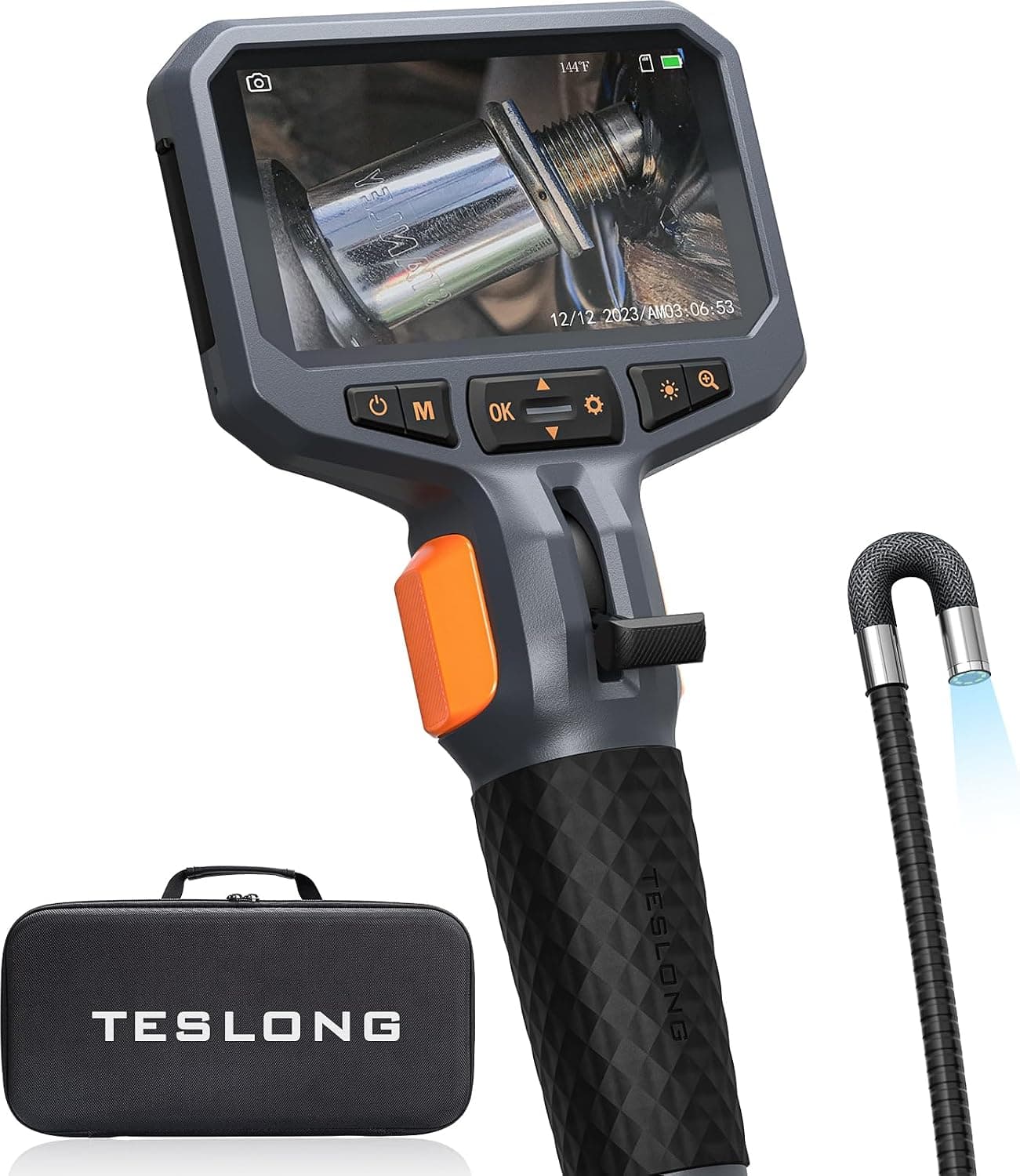
Teslong 2.0MP
- Our Score
- 9.8/10
- Best For
- Most buyers
- Probe Diameter
- Articulating probe
- Articulation
- Up to 210° joystick
- Lens Setup
- 2.0MP forward
- Display
- 4.5-inch IPS
- Use Style
- General inspection
- Portability
- IP67 + case
- Price Band
- Mid-range
Compare the best articulating borescopes for automotive engines, HVAC systems, pipes, walls, machinery, and professional inspection work. We evaluate steering control, single and dual lenses, probe diameter, screen clarity, lighting, waterproofing, and field durability—with real Amazon product photos and affiliate links.
Match probe diameter, articulation control, lens setup, and screen size to the inspection openings and viewing angles you actually need.
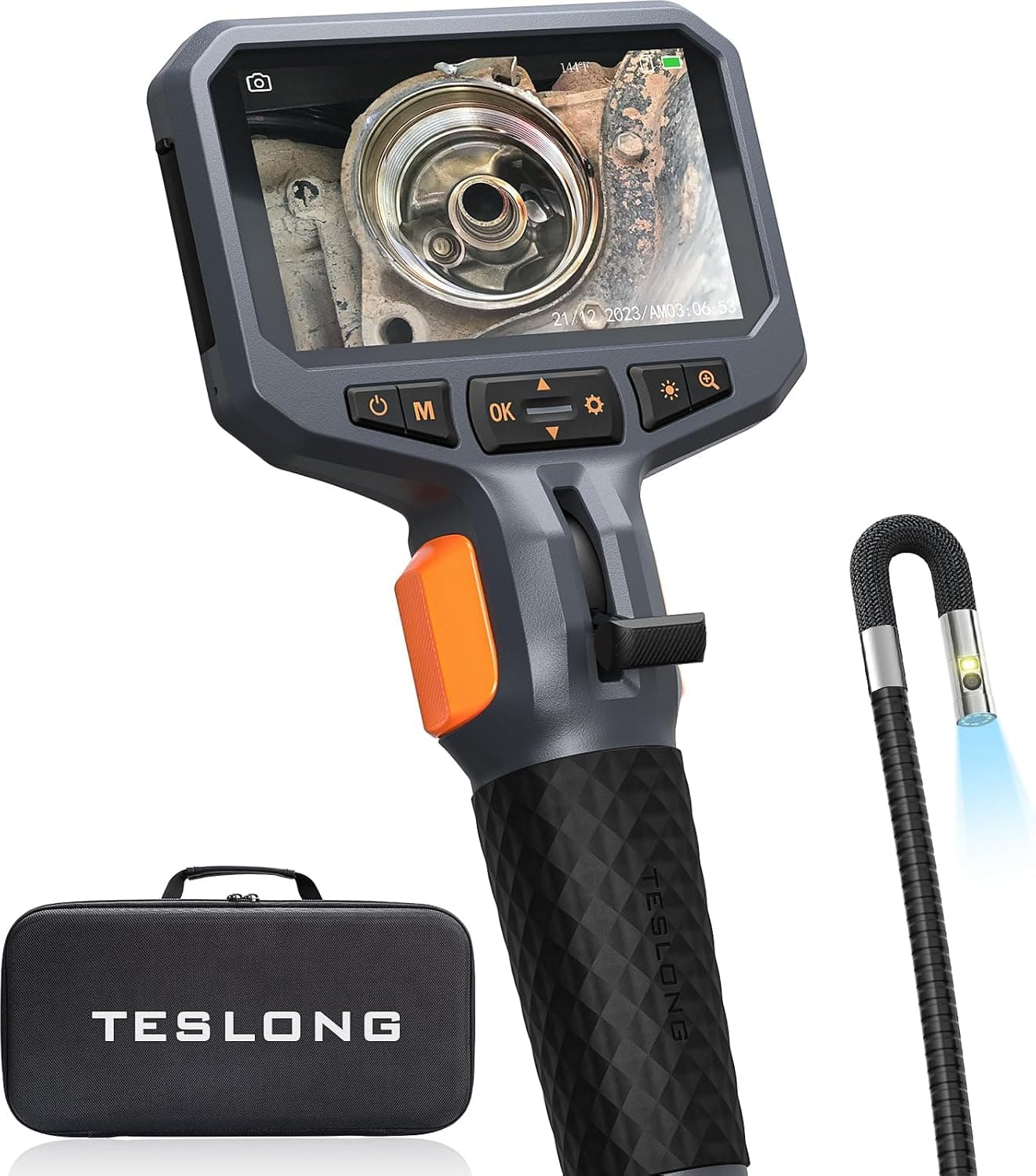
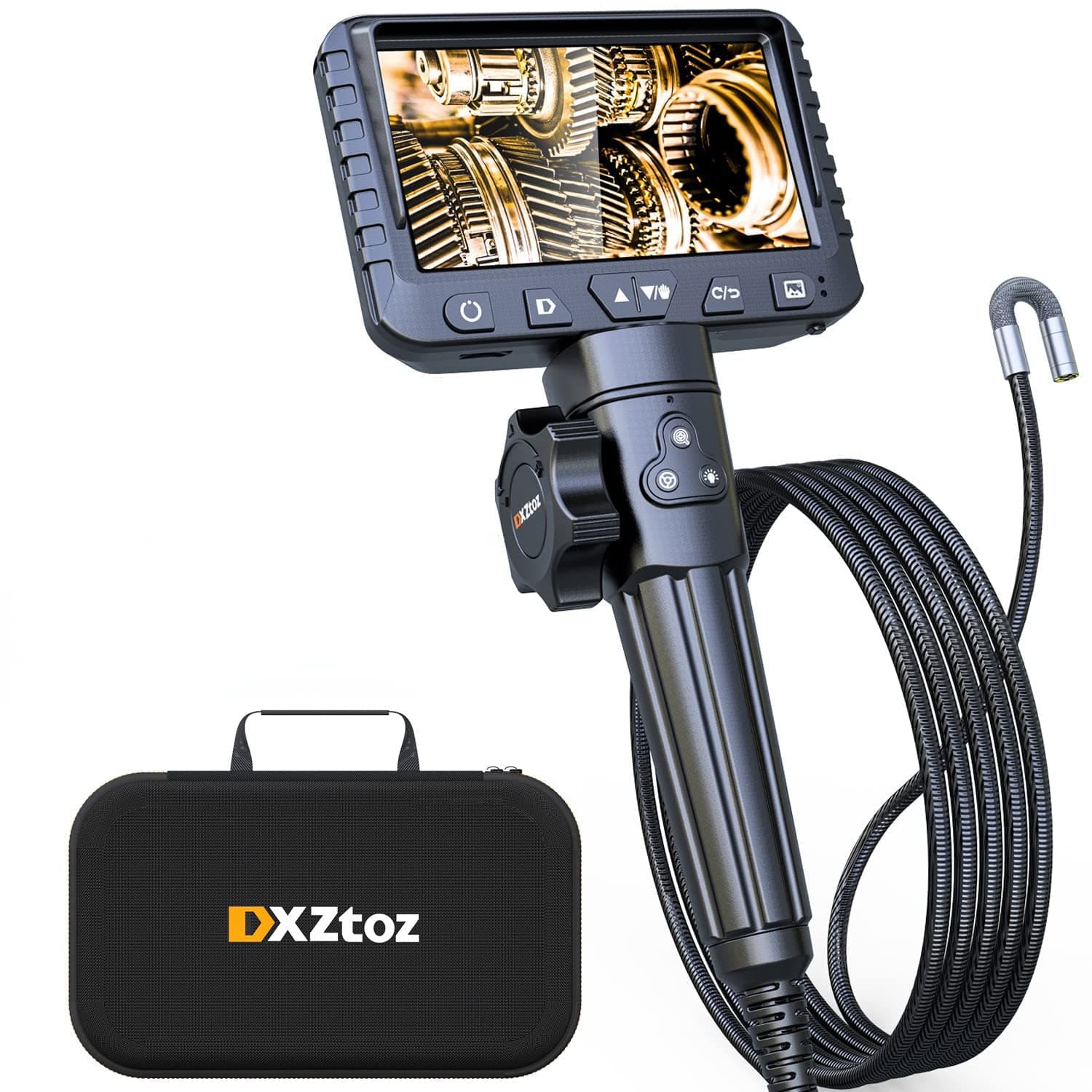
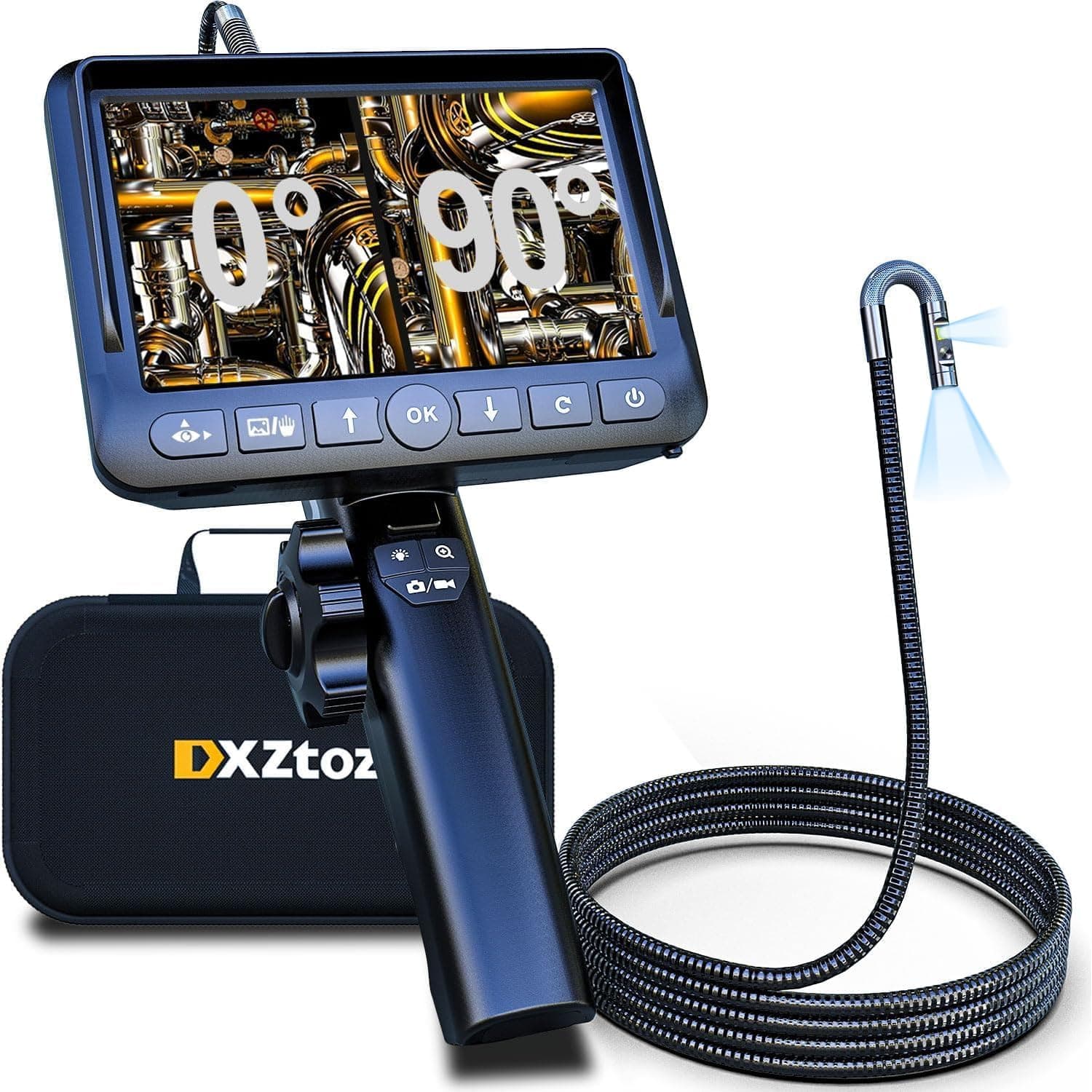
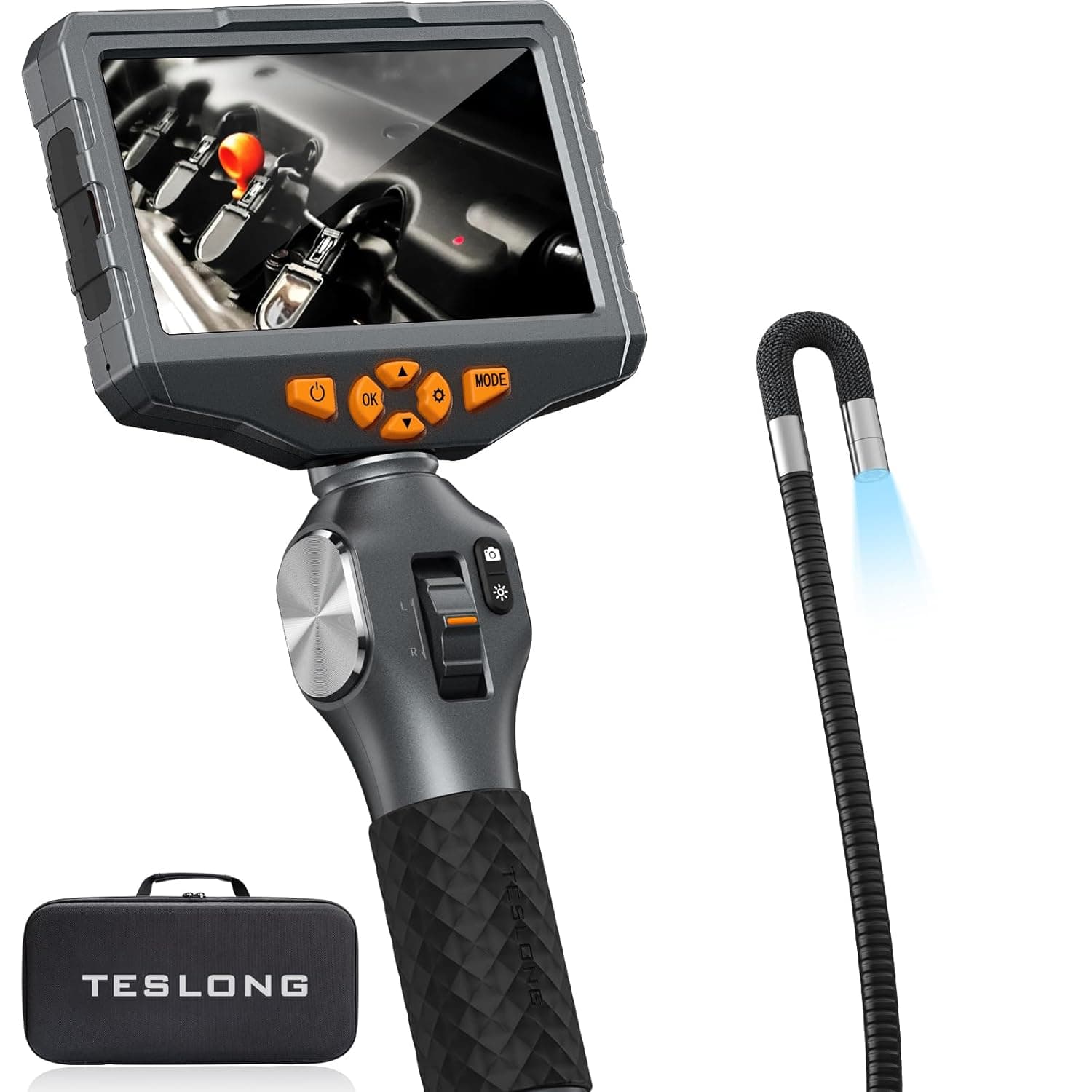
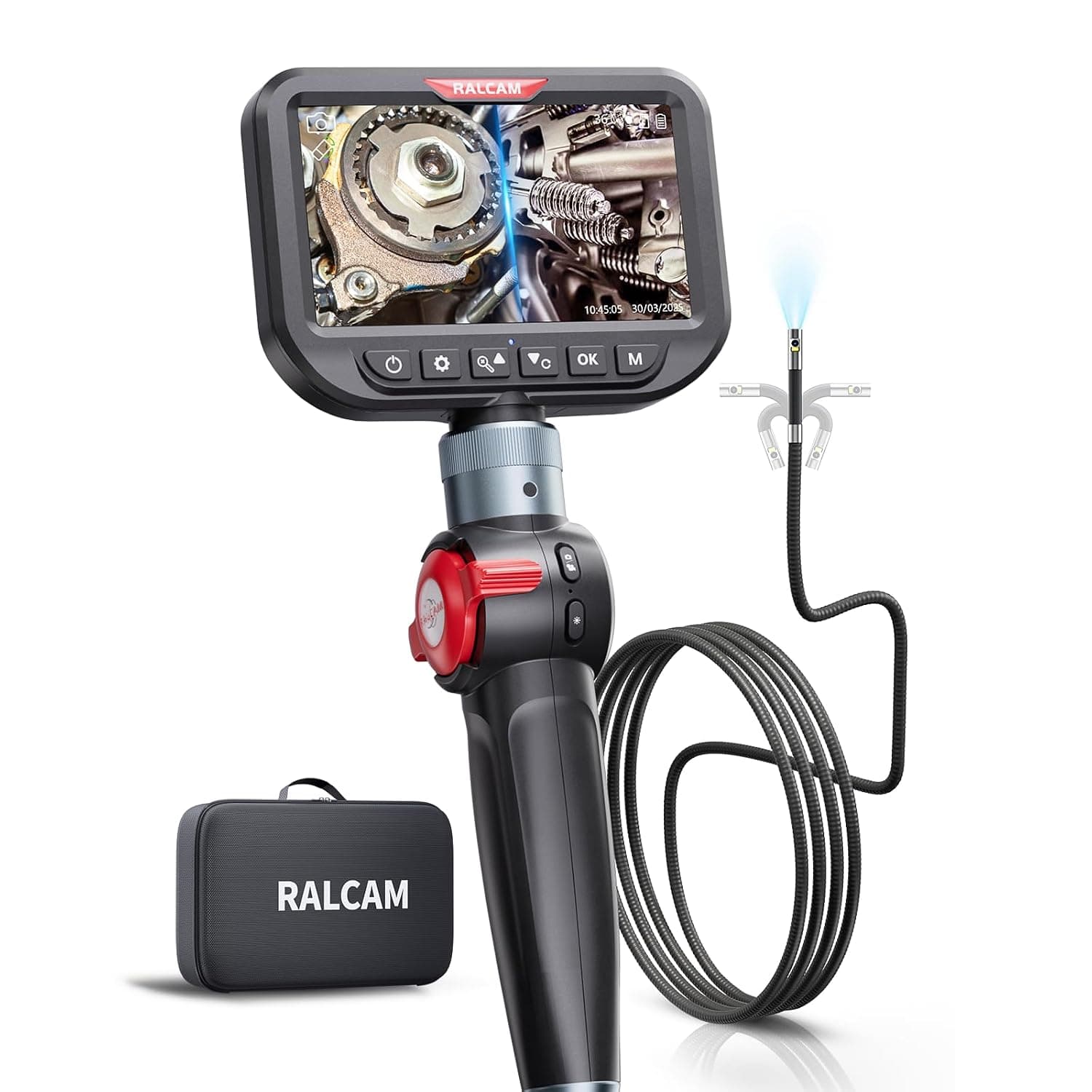
| Spec | | | | | | |
|---|---|---|---|---|---|---|
| Our Score | 9.8/10 | 9.7/10 | 9.6/10 | 9.5/10 | 9.4/10 | 9.3/10 |
| Best For | Most buyers | Side-view needs | Control-wheel steering | Large dual-lens view | Wireless sharing | Slim dual-lens access |
| Probe Diameter | Articulating probe | Articulating probe | 8.5mm | Dual-lens probe | 0.33-inch class | 6.5mm |
| Articulation | Up to 210° joystick | Two-way steering | Up to 220° | Articulating tip | Two-way head | Articulated slim |
| Lens Setup | 2.0MP forward | Forward + side | 2.0MP / 1080P | Forward + 90° side | Forward camera | Forward + side |
| Display | 4.5-inch IPS | 4.5-inch IPS | 4.3-inch IPS | 5-inch 1080P | 5-inch IPS | 5-inch HD |
| Use Style | General inspection | Engine / HVAC | Around obstacles | Machinery / HVAC | Auto / mechanical | Narrow openings |
| Portability | IP67 + case | Standalone kit | Long battery + case | Long-runtime kit | Tablet-share kit | IP67 probe kit |
| Price Band | Mid-range | Mid–upper | Value–mid | Mid-range | Mid-range | Value–mid |
A standard inspection camera bends with its cable but usually points wherever the probe naturally faces. An articulating borescope adds mechanical steering at the distal tip, letting the operator turn toward a valve, cylinder wall, weld, obstruction, or side passage after insertion.
This control is valuable in confined systems where rotating the entire cable is unreliable. Articulation also introduces moving parts that should be operated gently, kept within the stated bend range, and returned to a neutral position before withdrawal when the manual instructs it.
A single forward camera provides the most direct view while advancing the probe and can offer higher resolution at a given price. A dual-lens borescope adds a side-facing camera, allowing the operator to inspect a wall, pipe surface, or cylinder bore without sharply bending or retracting the probe.
Check the resolution and focal range of both lenses because the secondary camera may differ from the main camera. Switching lenses is useful, but it does not create a simultaneous three-dimensional view or measure defect depth.
Measure the smallest opening and the full route before choosing an endoscope inspection camera. A 6.5mm probe enters spaces that an 8.5mm camera cannot, but connector shoulders, articulation joints, hooks, and mirrors may be wider than the lens housing.
A five-foot semi-rigid cable is manageable for engine and wall inspection because it can hold a curve, yet excessive cable can become difficult to push through tight bends. Never force an articulated head past an obstruction.
Resolution claims describe recorded or displayed pixels but do not guarantee useful detail. Lens quality, sensor size, compression, lighting, screen resolution, motion, and correct focus distance all influence the image.
A five-inch IPS screen can make defects easier to review than a smaller monitor, while digital zoom only enlarges existing pixels and cannot recover missing detail.
An industrial borescope needs adjustable lighting because dark cavities require illumination while shiny metal, oil, and wet pipe walls can reflect too much light into the lens. Start at low brightness and increase it until surface texture becomes visible without blown highlights.
An IP67 rating commonly applies to the camera probe and cable, not automatically to the handheld screen, controls, connectors, or open ports. It also does not prove resistance to fuel, solvents, hot oil, or every industrial chemical.
Photo and video recording lets mechanics document conditions before disassembly, compare repeated inspections, and show findings to a customer or colleague. Wireless sharing can support a second viewer when diagnosis needs another set of eyes.
Stated runtime depends on screen brightness, LED intensity, recording, wireless use, temperature, and battery age. Charge before critical work and use the carrying case to protect the lens, articulation mechanism, screen, and cable.
It visually inspects areas that are difficult to access directly, including engine cylinders, valves, turbochargers, gearboxes, HVAC components, pipes, walls, and machinery. The steerable tip lets the camera look toward a surface after insertion, reducing unnecessary disassembly in suitable applications.
A dual-lens model is useful when both forward and side views are needed in a confined area. A single-lens borescope may offer simpler controls or higher primary-camera resolution for the price. Compare each lens's resolution, focus range, lighting, and probe diameter against the actual inspection task.
Measure the smallest access opening and account for the complete articulated tip and any accessory, not only the lens specification. A smaller probe improves access, but image sensor size, durability, articulation range, and lighting also matter. Never force the camera through an opening.
Only within the exact limits stated by the manufacturer, and the rating may cover the probe rather than the display or connector. IP67 does not guarantee resistance to hot fluids, fuels, solvents, pressure, or corrosive chemicals. Read the model manual before any wet or industrial inspection.
It can reveal visual evidence such as deposits, scoring, corrosion, foreign objects, or apparent cracks, but image angle, lighting, focus, and experience affect interpretation. A borescope view should be combined with service information and appropriate diagnostic tests before deciding on repair.
No. Useful clarity also depends on the lens, sensor, focus distance, illumination, compression, screen, cleanliness, and probe stability. Digital zoom enlarges pixels rather than creating additional detail. Evaluate the complete optical system and working distance.
Editorial Methodology
Last reviewed: 2026-08-04
We rank articulating borescopes by real inspection usefulness: probe access, steering control, lens setup, screen clarity, lighting, and field durability—not by the loudest resolution claim.
We compare published product details, real buying tradeoffs, warranty or support signals, and long-term ownership friction — not marketing claims in isolation. Prices and availability can change, so verify the final details with the retailer before purchasing.