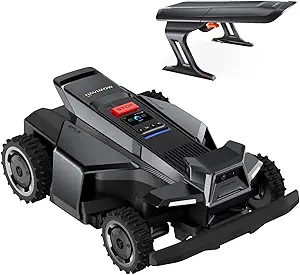
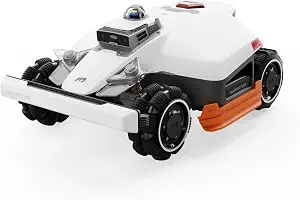
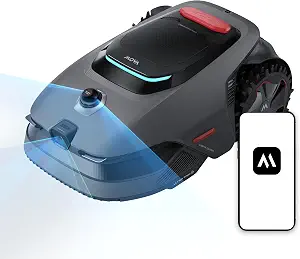
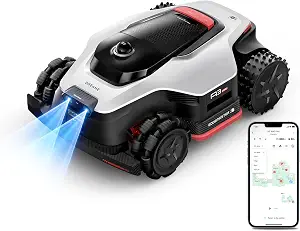
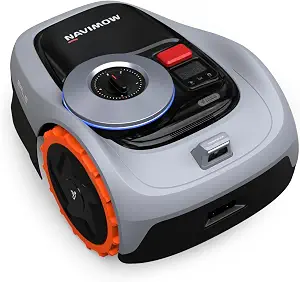
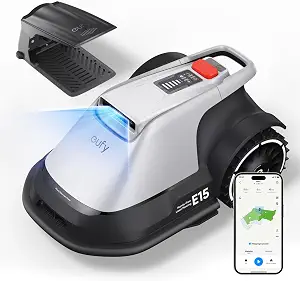
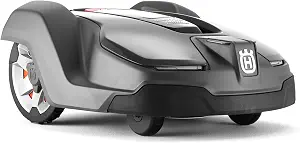
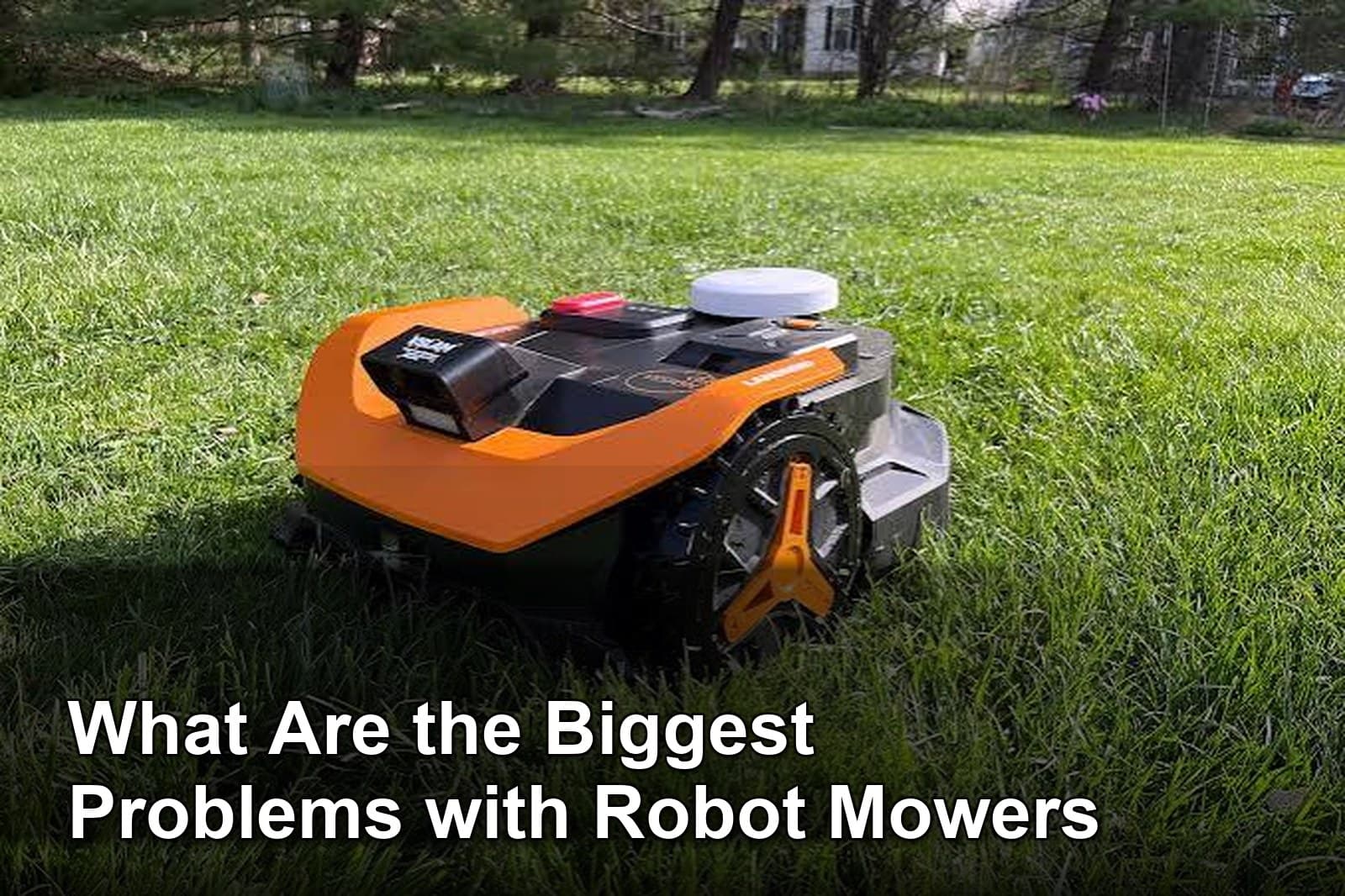
The rankings above are a scorecard. Below we dig into the three robot mowers we would actually put on our own lawns: how they map without boundary wire, how they handle slopes and wet turf, edge quality, app reliability, and the ownership headaches that matter after the first month — stuck events, theft risk, and whether you still need a trimmer.
Each write-up follows the same structure: what we like, what we do not, then a deeper look at navigation and cutting, terrain and ownership, app and security, and who should buy it.
#1Segway Navimow X430
Overview
The Segway Navimow X430 is the robot mower we kept coming back to for larger suburban lawns that need a clean cut without burying boundary wire. It pairs wire-free RTK plus AI vision with Xero-Turn AWD — a turf-safe steering system that turns without tearing grass the way skid-steer bots sometimes do on soft turf.
That combination of coverage (~1 acre), slope handling (up to 84%), and a 17-inch dual-disc cut is why it earns our Best Overall pick for robot lawn mowers in 2026. If you want wire-free navigation that still feels premium on finish quality, this is the mower at the top of our list.
What We Like
- +Xero-Turn AWD Steering: Tight turns on turf without the chew marks common on fixed-wheel skid bots.
- +17-Inch Dual-Disc Cut: Wider cutting path and cleaner finish on open suburban lawns.
- +Wire-Free RTK + Vision: No boundary wire to bury; RTK base plus cameras handle mapping and obstacle avoidance.
- +Strong Slope Rating: Up to 84% (40°) with AWD traction on hills that stop many vision-only units.
- +Large Coverage: Rated for roughly one acre, enough for many full suburban lots.
- +Adjustable Cut Height: 0.75–4 inches covers most cool- and warm-season grass preferences.
What We Don't Like
- ×RTK Base Placement: You still need a clear spot for the RTK antenna with a reasonable sky view.
- ×Premium Price: Flagship wire-free mowers cost more upfront than boundary-wire models.
- ×Edges Still Need Touch-Up: Like most robot mowers, fence lines and tight corners may need a trimmer pass.
- ×Newer Model, Fewer Long-Term Reviews: Early owner feedback is positive but the install base is still growing.
Navigation & Cutting
Wire-free RTK gives centimeter-class positioning when the base station has sky view, which matters on larger lawns where pure vision can drift near tree lines. AI vision handles dynamic obstacles — toys, pets, garden hoses — that a fixed map cannot predict.
The dual-disc 17-inch deck is the practical differentiator on open turf. You finish faster per pass and the cut looks more even than smaller single-blade bots on wide front yards. Xero-Turn AWD lets the unit pivot without aggressive wheel spin that leaves bare patches after wet mornings.
Terrain & Ownership
On moderate to steep slopes, AWD traction is not marketing fluff — it is the difference between finishing a schedule and finding the mower halfway down a hill waiting for rescue. The 84% slope rating puts the X430 in territory where vision-only budget bots simply stop.
Day-to-day ownership is mostly app scheduling, blade checks, and clearing the charging dock area. Expect to walk the lawn once after the first mapping run to confirm no zones were missed near heavy shade. For common robot-mower pain points — theft, stuck events, and edge gaps — see the Buying Guide below.
App & Security
The Navimow app handles multi-zone schedules, rain delays, and cut-height adjustments without feeling like a second job. Geofencing and PIN-style anti-theft features vary by region and firmware, but treating the dock like any outdoor appliance — visible placement, possibly a camera — is still smart practice.
If theft is a concern, treat the dock like any outdoor appliance: visible placement, PIN locks where available, and optionally a camera aimed at the charger.
Key Specs at a Glance
- Coverage: ~1 acre
- Navigation: Wire-free RTK + AI vision
- Drive: Xero-Turn AWD
- Max Slope: 84% (40°)
- Cut Width: 17 inches (dual-disc)
- Cut Height: 0.75–4 inches
- Boundary Wire: Not required
- ASIN: B0GQGPH4J8
Who Is the Navimow X430 Best For?
Choose the X430 when you want the best balance of wire-free convenience, slope capability, and cut quality on a larger suburban lawn.
- Suburban homeowners with up to ~1 acre and real hills.
- Buyers who refuse to bury boundary wire but still want RTK-grade mapping.
- Lawns where turf finish and AWD traction matter more than lowest price.
- Yards with mixed open turf and some tree canopy (RTK + vision helps both).
- Owners willing to place an RTK base with decent sky view.
Bottom Line
Plenty of robot mowers map without wire. The Navimow X430 earns Best Overall because it stacks the hard parts together: wire-free RTK, AWD turf-safe steering, wide dual-disc cutting, and slope headroom that budget vision bots cannot match. If your lawn is tiny and flat, the i105N saves money. For most larger suburban yards, the X430 is the mower we recommend first.
#2Mammotion LUBA 3 AWD 3000H
Overview
The Mammotion LUBA 3 AWD 3000H is built for yards that punish simpler bots: multi-level terrain, steep banks, narrow passages between beds, and tree canopy that breaks pure GPS or vision-only navigation. Its Tri-Fusion stack — 360° LiDAR, NetRTK, and AI vision — is overkill on a flat quarter-acre, but exactly what you want when the lawn has real complexity.
That is why it sits at #2 on our list as Best for Complex Terrain. If your property has slopes, islands, and awkward transitions that sent your last mower into a flower bed, Mammotion is the wire-free alternative we trust most after the Navimow X430.
What We Like
- +Tri-Fusion Navigation: LiDAR + NetRTK + vision covers canopy, shade, and dynamic obstacles better than single-sensor bots.
- +AWD Traction: Handles up to 80% slopes — the kind of bank where cheaper vision mowers give up.
- +Multi-Zone Control: Splits front, side, and back areas without running new boundary wire.
- +Wire-Free Setup: No trenching; mapping happens in the app after an initial survey run.
- +Strong Complex-Yard Fit: Narrow paths and uneven turf are where LiDAR mapping pays off.
- +~0.75 Acre Coverage: Right-sized for many split-level suburban lots.
What We Don't Like
- ×Premium Pricing: Tri-Fusion hardware costs more than vision-only entry models.
- ×Smaller Review Pool: Fewer Amazon reviews than established Navimow i-series units.
- ×Still Not Magic on Deep Mud: Very wet turf can challenge any small robot; plan dock placement carefully.
- ×Edge Finishing: Zero-edge marketing helps, but fence lines may still need a trimmer.
Navigation & Cutting
LiDAR gives a 360° picture of the yard structure — beds, trees, hard edges — while NetRTK pins position when sky view allows. AI vision catches moving obstacles LiDAR alone might miss, like a hose left across a path. Together they reduce the stuck-and-rescue cycle that frustrates first-time robot-mower owners.
On cutting quality, Mammotion targets a consistent height across uneven ground rather than racing for the widest deck. The win is reliability through complexity: the mower finishes the schedule on lumpy side yards where vision-only bots drift or skip strips.
Terrain & Ownership
AWD is the headline for steep sections. If you have a visible slope on Google Earth, assume you need drive power, not just a high slope number on a spec sheet. The LUBA 3 earned its Best for Complex Terrain badge on those properties.
Ownership means checking blades, keeping the LiDAR window clean, and verifying zones after major landscaping changes. Mammotion's app is capable but dense — budget an afternoon for the first full map, then tweaks are quick.
App & Security
The Mammotion app supports scheduling, no-mow zones, and firmware updates. Anti-theft features vary by market; treat physical dock security and visibility as part of the install plan, especially on front-yard charging locations.
For monitoring the dock area, a fixed outdoor camera is a sensible add-on if the mower lives within sight of the house.
Key Specs at a Glance
- Coverage: ~0.75 acre
- Navigation: 360° LiDAR + NetRTK + AI vision
- Drive: AWD
- Max Slope: 80%
- Boundary Wire: Not required
- Multi-Zone: Yes
- ASIN: B0GKNQKJJQ
Who Is the LUBA 3 AWD 3000H Best For?
Buy the LUBA 3 when your lawn has real terrain — not just size — and you want wire-free navigation that can handle it.
- Steep or split-level suburban lots.
- Yards with multiple islands, beds, and narrow side passages.
- Owners who tried vision-only bots and hit stuck events or missed strips.
- Properties with partial tree canopy where RTK or vision alone struggled.
- Shoppers prioritizing traction and mapping over the absolute lowest price.
Bottom Line
The LUBA 3 AWD 3000H is not the mower for a flat postage-stamp yard. It earns #2 because Tri-Fusion navigation and AWD traction solve the problems that make robot mowing feel like a hobby — rescue missions, remapping, and skipped hills. If your terrain is simple, save money elsewhere. If the yard fights back, Mammotion belongs on your short list.
#3MOVA LiDAX Ultra 2000
Overview
The MOVA LiDAX Ultra 2000 targets the buyer who wants wire-free mowing without placing an RTK base station on the roof or patio. It uses 360° 3D LiDAR plus AI vision to auto-map the yard, promises zero-edge cutting along hard boundaries, and covers roughly half an acre — a sweet spot for many U.S. suburban front-and-back combinations.
That balance of simple setup, no boundary wire, and LiDAR-grade mapping is why it earns Editor's Choice at #3. It is the pick when you want modern navigation without the full flagship price of the largest AWD units.
What We Like
- +No RTK Base Required: LiDAR auto-mapping removes another install step and roof-line antenna debate.
- +No Boundary Wire: Fully wire-free perimeter definition in the app.
- +Zero-Edge Focus: Gets closer to fences and hard edges than many first-gen wire bots.
- +360° 3D LiDAR: Strong structure mapping for typical 0.25–0.5 acre suburban shapes.
- +Moderate Slope Handling: Up to 45% covers many yards that are not true hillside properties.
- +Cleaner Entry Price: Sits below flagship RTK+AWD models while beating pure vision on mapping reliability.
What We Don't Like
- ×Not a Hillside Mower: 45% slope limit trails Mammotion and Navimow X430 on steep banks.
- ×Half-Acre Ceiling: Larger estates need a bigger model or multi-unit plan.
- ×LiDAR Window Maintenance: Dust and wet grass clippings need occasional cleaning for best performance.
- ×Thick Canopy Edge Cases: Very dense tree cover can still challenge any wire-free system — walk the map after install.
Navigation & Cutting
LiDAR-first mapping means the mower learns bed edges, paths, and house footprints without you trenching wire. AI vision supplements LiDAR for moving obstacles during mow days. For typical suburban geometry — rectangle lawn, side gate, driveway border — the combo feels faster to set up than RTK systems that need base placement tuning.
Zero-edge cutting is the daily quality-of-life win. You still may trim fence corners once a season, but the gap between robot line and hard edge is narrower than older boundary-wire Husqvarna-era defaults many owners remember.
Terrain & Ownership
On flat to gently rolling turf, the LiDAX Ultra 2000 is the easy recommendation: map once, schedule, and intervene rarely. Push it onto steep banks or deeply rutted side yards and you should step up to AWD RTK or LiDAR+NetRTK models instead.
Ownership is blade swaps, keeping the charging pad clear, and checking the app after storms for stuck logs or shifted patio furniture. MOVA's ecosystem is newer in the U.S. than Husqvarna or Segway, but early owner reports on mapping speed are encouraging.
App & Security
App mapping walks you through lawn boundaries, no-go zones, and cut schedules. Rain sensors and manual pause behave as expected. Use PIN locks and visible dock placement; robot mowers are valuable and portable — see our notes on theft in the Buying Guide below.
A dock-facing camera adds peace of mind if the charger sits near a side gate or driveway.
Key Specs at a Glance
- Coverage: ~0.5 acre
- Navigation: 360° 3D LiDAR + AI vision
- Drive: Standard
- Max Slope: 45%
- Boundary Wire: Not required
- RTK Base: Not required
- ASIN: B0G3CBW2H8
Who Is the LiDAX Ultra 2000 Best For?
Choose the LiDAX Ultra 2000 when you want wire-free LiDAR mapping on a typical suburban lot without RTK base hardware.
- 0.25–0.5 acre lawns with moderate slopes.
- Buyers who want no boundary wire and no RTK antenna install.
- Owners who care about edge quality on driveways, patios, and fence lines.
- Shoppers stepping up from budget vision-only bots for better mapping.
- Yards that do not need 80%+ slope AWD capability.
Bottom Line
The MOVA LiDAX Ultra 2000 wins Editor's Choice by removing friction: no wire, no RTK base, solid LiDAR mapping, and zero-edge ambition at a tier below flagship AWD prices. It will not out-climb a LUBA 3 on a hillside, and it is not the acre-wide flagship. For the median suburban lawn in 2026, it is the wire-free sweet spot we would recommend to friends who find RTK setup annoying.