Pool Cleaners
Best Robotic Pool Cleaners 2026
By Sofia Almeida | Published May 11, 2026 | Updated May 14, 2026
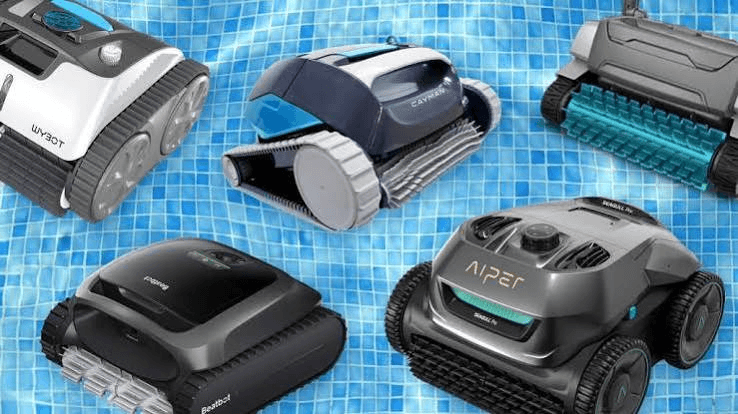
If you only want the bottom line: for most in-ground residential pools, start with the Aiper Scuba S1. For vinyl above-ground pools, the Dolphin Nautilus Pool Up is the safer, gentler pick. Large or feature-heavy pools point to the Beatbot AquaSense 2 Ultra, while smaller budgets can land on the Aiper Scuba SE for floor-only maintenance. If you are validating that shortlist against an Aiper Scuba S1 Review, keep pool shape, wall coverage, and filter upkeep ahead of headline scores.
Below is our recommended list first, then a deeper look at where each robot fits, what it does well, where it falls short, and the features that actually change week-to-week ownership. We shaped this guide around the same category logic used by major buyer’s guides (coverage, corded vs cordless, pool type, and real retrieval hassle), then wrote original buying notes for GearsClaw readers.
Our recommended list (quick verdict)
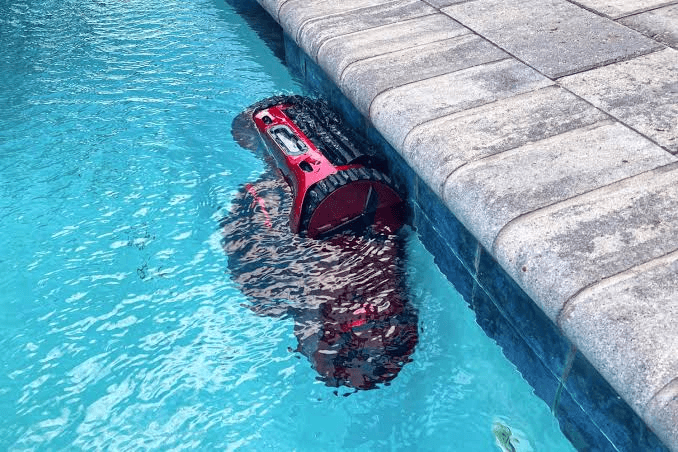
Use this shortlist as a decision table. Match your pool type and pain point first, then read the detailed section for that model.
- Best overall for in-ground pools: Aiper Scuba S1: cordless walls-and-floor cleaning with strong daily usability
- Best overall for above-ground pools: Dolphin Nautilus Pool Up: gentle corded scrubbing that protects vinyl liners
- Best automatic / app-driven pick: Polaris VRX iQ+: schedules and monitoring via Wi‑Fi for larger decks
- Best budget: Aiper Scuba SE: simple floor cleaning and edge parking without premium extras
- Best for large pools: Beatbot AquaSense 2 Ultra: high-capacity cordless cleaning with advanced navigation
- Best for stairs: Dolphin Explorer E50: stronger climbing and step coverage for complex shapes
- Best for waterline scrubbing: Aiper Scuba X1: focused on the tile band and greasy ring
- Best dedicated skimmer: Beatbot iSkim Ultra: surface leaves and floating debris, not a floor robot substitute
How to use this guide
Robotic cleaners are not interchangeable. Corded units usually win on uninterrupted runtime and scrubbing force; cordless units win on setup speed and tangle-free decks. Floor-only robots keep weekly maintenance cheap; wall and waterline models matter when sunscreen film and algae cling to vertical surfaces.
Price spans a wide range, from entry cordless floor cleaners to premium AI-mapped systems. The “best” robot is the one you will run two or three times a week without fighting cords, dead batteries, or a filter basket that is miserable to empty. Each review below starts with ideal use cases, then pros, cons, and the standout selling point.
Aiper Scuba S1: best overall for in-ground pools
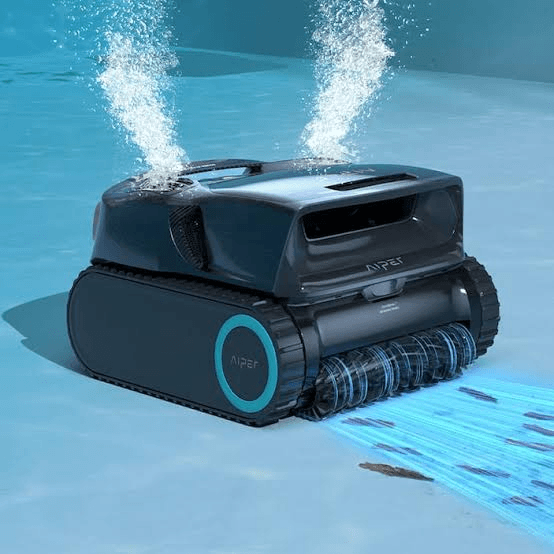
Best for: mid-size in-ground pools (roughly up to about 1,600 sq ft) where you want cordless convenience, wall climbing, and a robot you can schedule into a twice-weekly habit. Ideal if you hate floating power cables but still expect visible floor-and-wall results after each cycle.
Pros: Strong all-around cleaning for residential debris; cordless drop-and-go workflow; Eco-style floor-focused modes can stretch runtime for lighter maintenance days; filter capacity is generally large enough for a full cycle without mid-clean emptying; navigation is more systematic than random “bump and turn” robots.
Cons: Retrieval is the weak spot: once the basket is waterlogged, the unit feels heavier than the dry weight suggests; very large or heavily leafed pools may need a second pass or a higher-capacity model; fine silt can still challenge any mid-tier filter if your sand load is extreme.
Standout selling point: balanced cordless performance. The Scuba S1 sits in the sweet spot between basic floor vacuums and ultra-premium docking systems: enough intelligence and coverage for everyday in-ground ownership without forcing you into the highest price tier. If you want one primary recommendation for a typical backyard in-ground pool, this is it.
Dolphin Nautilus Pool Up: best overall for above-ground pools
Best for: above-ground vinyl pools (and gentler in-ground use) where liner protection matters as much as debris pickup. Choose this when you want simple one-button operation and do not want to manage battery charging rituals.
Pros: Soft brushing that climbs walls without the aggressive attack some cordless scrubbers use; intelligent mapping without requiring an app; quiet, predictable cycles; floating cord design reduces underwater tangles compared with poorly floated cables; lightweight retrieval relative to many premium robots.
Cons: You need a nearby outdoor outlet; cord storage still adds a few minutes after every run; mesh bags can spill debris back into the water if you yank the unit out too quickly; scrubbing force is intentionally milder, so stubborn waterline rings may need a dedicated brush or a waterline-focused robot.
Standout selling point: vinyl-safe reliability. Above-ground pools punish aggressive treads and harsh brushes. The Nautilus Pool Up earns its slot by staying effective on floors and walls while remaining kind to liners, exactly the trade-off most above-ground owners should prioritize.
Polaris VRX iQ+: best automatic / connected pick
Best for: larger in-ground pools where scheduling from a phone, filter reminders, and a long tangle-reducing cable matter more than the lowest purchase price. Also a fit for households that want “set a weekly plan and stop thinking about it.”
Pros: Wi‑Fi control and scheduling through a companion app ecosystem; long cable reach for big decks; Easy Lift–style wall climb for retrieval reduces the worst part of ownership; learns pool dimensions over early cycles to tighten later routes; storage caddy improves off-season organization.
Cons: Heavy and more expensive than mainstream cordless options; overkill for small pools or hot-tub-sized water; more parts and setup than a one-button drop-in robot; you are still managing a cord, even if it is a better cord.
Standout selling point: automation depth. If your definition of “best” is the robot that disappears into a calendar instead of a weekend chore list, the VRX iQ+ is the connected pick on this shortlist.
Aiper Scuba SE: best budget
Best for: smaller above-ground or simple in-ground pools that mainly need floor debris removal. Perfect first robot if you want cordless convenience without paying for walls, waterline scrubbing, or app features.
Pros: Low price relative to full-coverage robots; one-button start; docks near the edge for easier retrieval; lightweight handling; filter emptying is straightforward for routine leaf and sand pickup.
Cons: Floor-only coverage: walls and waterline stay on you; navigation is basic, so expect occasional missed patches until repeated cycles fill gaps; no Wi‑Fi alerts when a job finishes; limited sweet spot on pool size.
Standout selling point: honest entry price for cordless floors. The Scuba SE is not pretending to be a premium all-surface system. It wins by doing the most common job (floor cleanup) without the cost stack of climbing hardware and AI navigation.
Beatbot AquaSense 2 Ultra: best for large pools
Best for: large or geometrically complex in-ground pools where mid-tier robots leave dead zones, struggle with multi-pass routes, or run out of battery before finishing. Also for owners who want advanced navigation and are willing to pay for it.
Pros: High-end cordless platform aimed at bigger water volumes; stronger navigation and coverage ambitions than compact robots; designed for owners who treat cleaning as a full-system upgrade rather than a seasonal gadget; pairs well with households already comfortable managing premium smart gear.
Cons: Premium pricing puts it out of reach for casual pool owners; feature density can be overkill under ~15,000–20,000 gallons; as with any flagship cordless unit, charging discipline and filter maintenance still determine real-world happiness.
Standout selling point: scale. When the pool is big, oddly shaped, or packed with features, throwing a compact robot at the problem usually wastes time. AquaSense 2 Ultra is the shortlist answer for “my pool is simply larger than average.”
Dolphin Explorer E50: best for stairs
Best for: in-ground pools with prominent steps, benches, or transitional slopes where floor-only paths leave dirt sitting on treads. Choose this when stair debris is your recurring complaint after every party weekend.
Pros: Climbing-oriented design philosophy from a brand with deep corded robotics heritage; better chance of addressing step surfaces than basic floor cleaners; suitable for owners who already accept corded power in exchange for consistent runtime.
Cons: Higher price than everyday cordless models; cord management remains part of the ritual; if your pool has minimal steps, you are paying for capability you may rarely use.
Standout selling point: step coverage focus. Most “best overall” robots are optimized for open floor rectangles. The Explorer E50 earns a category win by targeting the geometry that generic robots skip.
Aiper Scuba X1: best for waterline scrubbing
Best for: pools that develop a greasy tile ring from sunscreen, body oils, and pollen, especially when floor robots leave the waterline looking untouched. Ideal as an upgrade when your current cleaner already handles floors but fails the visual test at the tile band.
Pros: Waterline-oriented scrubbing is the reason this model makes the list; useful when aesthetics at the water’s edge drive guest-facing standards; fits owners who specifically shop for wall-and-line performance rather than raw floor suction alone.
Cons: Typically costs more than floor-focused cordless units; if your main debris is heavy leaves on the floor, a dedicated skimmer plus a mid-tier floor robot may be a smarter combo; premium waterline robots can be excessive for lightly used pools.
Standout selling point: the tile-band problem. Waterline film is what neighbors notice. Scuba X1 is on the list because it attacks that failure mode directly instead of hoping floor suction somehow fixes vertical residue.
Beatbot iSkim Ultra: best dedicated skimmer
Best for: surface leaves, bugs, and floating debris, especially during heavy leaf seasons, when you want a floating skimmer robot instead of (or in addition to) a floor cleaner. Think of it as a surface specialist, not a full pool vacuum replacement.
Pros: Targets the top of the water where many floor robots never work; useful companion to a floor/wall robot in leafy climates; reduces the “morning skim with a net” chore that burns time before you even start scrubbing.
Cons: Does not replace a floor-and-wall cleaner; another device to charge, empty, and store; if your debris sinks quickly, a floor robot remains the higher priority purchase.
Standout selling point: surface isolation. Pairing a skimmer with a floor robot often beats buying one mediocre all-in-one that does neither job well. iSkim Ultra is the surface half of that strategy.
Final verdict: which robot should you buy?
Most in-ground owners should begin with the Aiper Scuba S1: cordless coverage for floors and walls, enough intelligence for weekly use, and fewer deck hazards than a long power cable. Above-ground vinyl pools should prefer the Dolphin Nautilus Pool Up for gentler scrubbing and simple corded reliability.
If your pool is large or unusually complex, jump to Beatbot AquaSense 2 Ultra. If stairs or waterline rings are the specific failure point, choose Dolphin Explorer E50 or Aiper Scuba X1 instead of another generic floor unit. Budget shoppers can start with Aiper Scuba SE and upgrade later. Heavy leaf seasons may justify adding Beatbot iSkim Ultra as a surface teammate.
Whatever you pick, commit to a schedule. A mid-tier robot run three times a week usually beats a flagship robot that sits in the shed. Empty filters promptly, store units dry, and size the machine to your real pool, not the brochure’s maximum.
Buying checklist before you order
Confirm pool type (above-ground vinyl vs plaster/tile in-ground), approximate surface area, and whether you need walls, waterline, stairs, or surface skimming. Decide corded vs cordless based on outlet access and your tolerance for charging. Check filter style and how annoying emptying will be after a windy week.
Finally, be honest about automation needs. App scheduling is valuable if you travel or forget chores; it is wasted money if you already stand on the deck every Saturday morning. Match features to behavior, and the shortlist above will get you to the right aisle quickly.
- Pool type and liner sensitivity
- Size / shape complexity (including steps)
- Coverage needs: floor only vs walls vs waterline vs surface
- Corded outlet access vs cordless charging habits
- Filter emptying and storage workflow
- Budget tier: entry, mid, or premium automation
Frequently Asked Questions
What is the best robotic pool cleaner overall in 2026?▾
For most in-ground residential pools, we recommend starting with the Aiper Scuba S1. Above-ground vinyl pools are usually better served by the Dolphin Nautilus Pool Up.
Do I need a cordless robot?▾
Cordless is ideal when you lack a convenient deck outlet or hate cord management. Corded robots still excel for uninterrupted runtime and many heavy-scrubbing jobs.
Will one robot clean floors, walls, and the waterline?▾
Only models designed for those surfaces. Floor-only budget robots will not fix a greasy waterline; check coverage claims against your actual pain points.
Is a skimmer robot enough by itself?▾
No. A dedicated skimmer like the Beatbot iSkim Ultra handles floating debris. You still need floor (and often wall) cleaning for a complete routine.
How often should I run a pool robot?▾
Two to three times per week is typical. Increase frequency after storms, during leaf drop, or when the pool sees heavy use.
Do robotic cleaners replace my pool pump and filter?▾
No. Robots pick up debris; your circulation and filtration system still balances and clarifies the water.