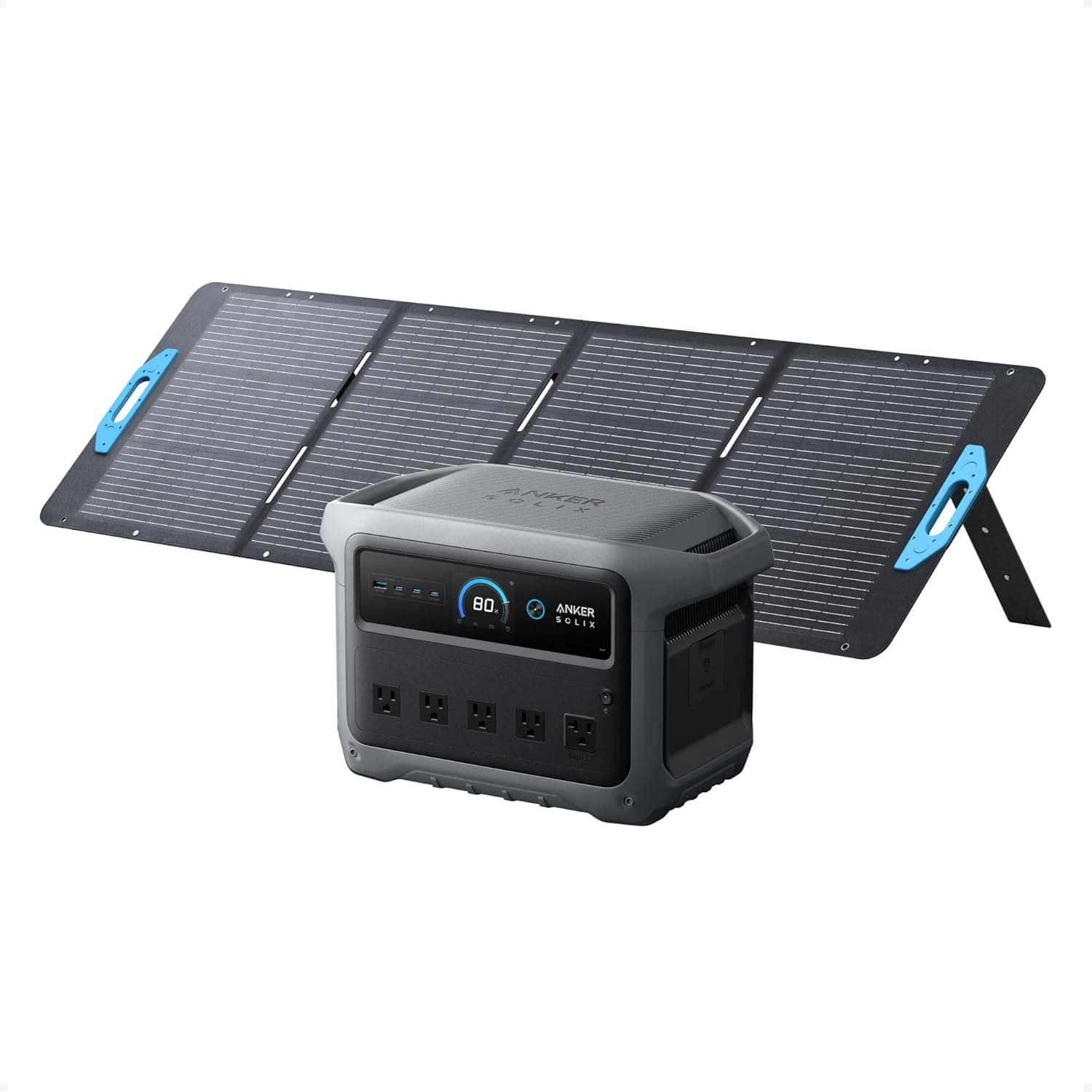
Portable Power
Best Solar Generators for Container Houses 2026
By Marcus Chen | Published May 17, 2026 | Updated May 20, 2026
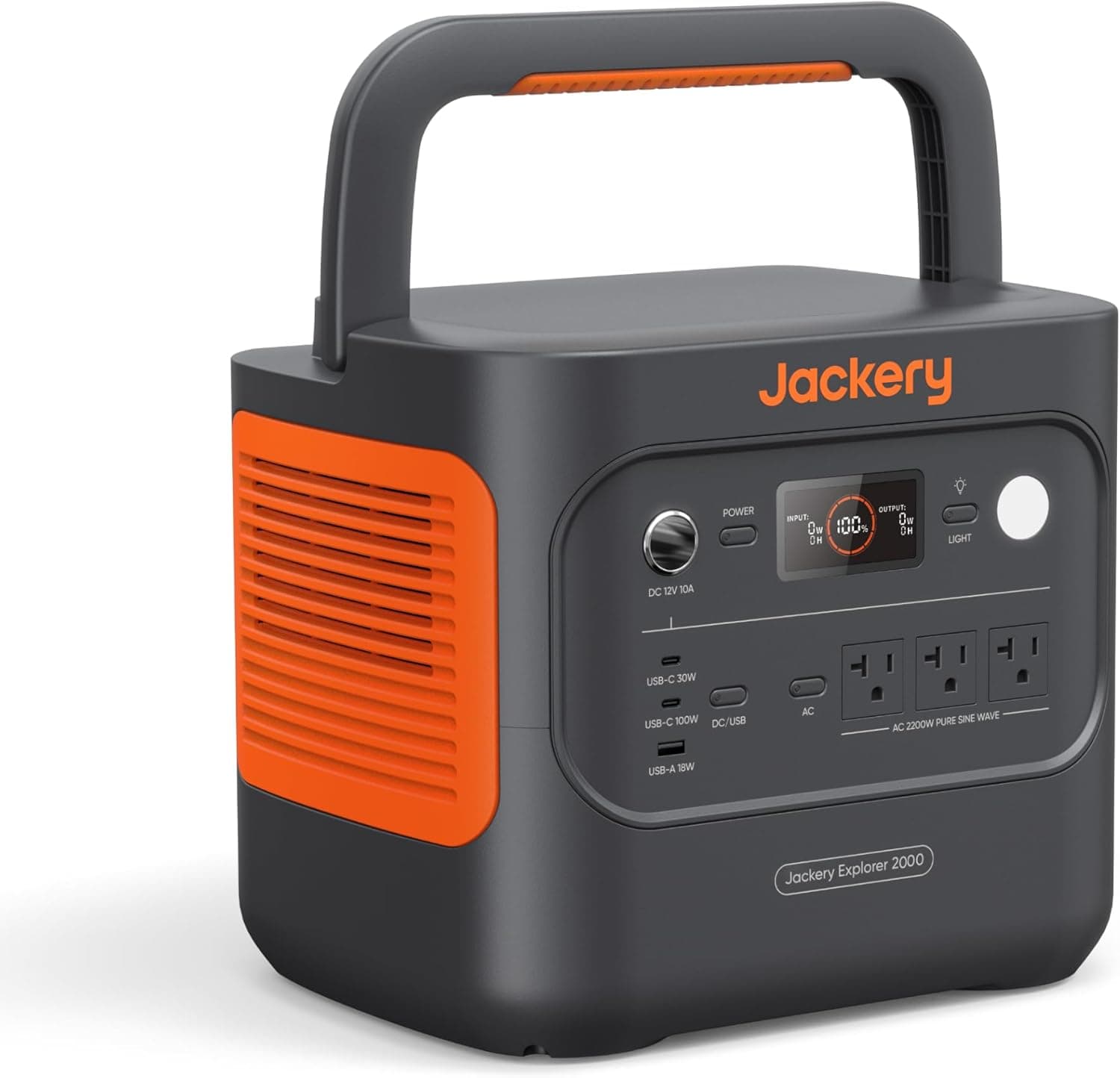
Container houses create a power-planning challenge that sits somewhere between RV living, cabin life, and a small permanent home. The metal shell can amplify summer heat, roof space is limited, and many builds rely on a compact electrical system that has to cover refrigeration, lighting, networking, water pumping, and occasional cooking loads without the luxury of a large utility service. If you arrived here after reading a BLUETTI AC200L Review, keep the bigger picture in mind: daily loads, solar roof limits, and how much autonomy your build really needs.
That is why choosing the best solar generator for a container house is not mainly about brand popularity. It is about matching daily energy use, simultaneous appliance demand, bad-weather battery reserve, and realistic solar recharge. This guide walks through the numbers that matter, explains where portable power stations work well, and shows when a container home should move up to a hardwired hybrid inverter design instead.
Key takeaways
- For most container houses, the right system starts with a real load audit; guessing from product marketing almost always leads to undersizing.
- Battery capacity should be sized in usable kWh, not headline watt-hours alone, with at least one full day of autonomy and preferably more for off-grid living.
- Continuous inverter output and startup surge matter as much as battery size because fridges, pumps, induction devices, and mini-splits often overlap.
- A container house solar generator only works long term if the solar array can replace your average daily use during your real sun window, not an ideal lab scenario.
- If your build needs subpanel integration, 240 V loads, large HVAC, or all-electric cooking every day, a modular power station may be a stepping stone rather than the final system.
Why container houses need a different power plan
A container house may look small on paper, but its electrical behavior is rarely as simple as a tiny weekend cabin. Many owners run the same essentials as a conventional home: a fridge, lights, Wi-Fi, laptop charging, ventilation fans, a water pump, security cameras, and sometimes a mini-split or induction cooktop. The difference is that these loads are being served from a much tighter envelope, often with limited wall space, restricted roof area for panels, and little tolerance for heat buildup around batteries and electronics.
That combination changes what the best solar generator for a container house actually means. A good fit is not just portable and quiet; it needs clean inverter output, strong surge handling, expandable storage, stable LiFePO4 chemistry, and a solar input window that matches a real panel array. In other words, container-house buyers should think less like campers and more like micro-home system designers.
This is also where many content pieces on the web oversimplify the decision. A 2 kWh power station may sound large, but it can feel very small once a refrigerator cycles all day, the internet stays on 24/7, and a pump or appliance stack comes online during the evening. Container homes reward conservative planning and punish optimistic assumptions.
- Limited roof area often restricts panel count unless you use a ground mount, awning mount, or adjacent structure.
- Steel shells can trap heat, which increases stress on batteries, inverters, and cable terminations if ventilation is poor.
- Many builds grow over time, so expansion ports and modular batteries can be more valuable than saving a little money up front.
- Appliance overlap matters: a small home can still produce large short-term power spikes.
Run a real load audit before comparing models
The smartest way to size a solar generator for a container house is to write down every device you expect to run in a normal day, then estimate both watt-hours per day and peak overlap. Daily energy tells you how large the battery bank should be. Overlap tells you how powerful the inverter must be. You need both numbers. Focusing on only one is how people end up with a battery that lasts all day but cannot run the appliances they want at the same time.
Start with essentials first: fridge, lighting, router, modem, laptop, phone charging, and ventilation. Then add intermittent but meaningful loads such as water pumps, microwave bursts, induction cooking, coffee makers, or power-tool charging. Finally, separate seasonal loads such as electric heating and air conditioning, because they usually dominate the system far more than people expect.
A quick formula is simple: watts x hours = watt-hours. A 90 W laptop used for 4 hours consumes about 360 Wh. A mini-fridge averaging 50 W over 24 hours uses around 1.2 kWh. A 1,200 W induction hob used for 20 minutes adds another 400 Wh. Once you total everything, add headroom for inverter losses, charging losses, cloudy days, and the fact that real-world use creeps upward after move-in.
- Ultra-efficient weekend or guest container: often around 1.5 to 3 kWh/day.
- Full-time minimalist container home: commonly around 3 to 6 kWh/day.
- Container home with mini-split, pump, frequent cooking, or office equipment: often around 6 to 10+ kWh/day.
- All-electric heating or heavy air-conditioning can push demand beyond what most portable solar generators are meant to cover.
Size inverter output for simultaneous loads and startup surge
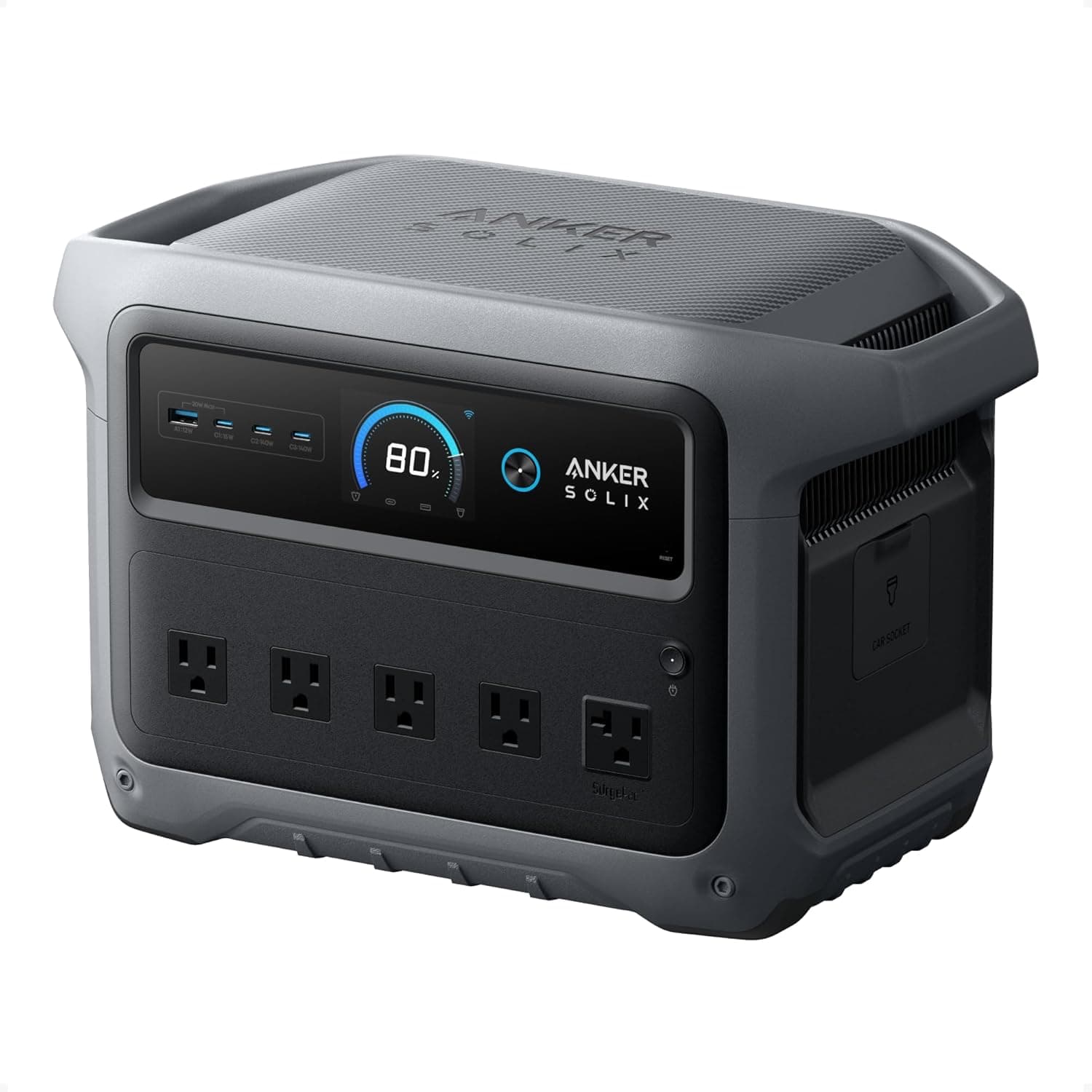
Battery capacity gets the attention, but inverter sizing is where many container-house systems fail first. A power station can have enough stored energy for the day and still trip instantly if a pump, microwave, kettle, or induction burner starts while the fridge compressor is already running. The right question is not 'What is my biggest appliance?' but 'What might run together, and what surges at startup?'
For container homes, a practical minimum for serious daily use is often in the 2,000 W class, especially if you are powering kitchen devices, refrigerators, or utility loads from the same box. Smaller inverters can work for basic electronics and lighting, but once you expect home-like comfort, the margin disappears quickly. Pumps, compressors, and mini-splits may also demand a higher surge ceiling even when their running wattage looks reasonable.
Look for a pure sine wave inverter, clear continuous and peak ratings, and documentation that does not hide behind vague marketing language. If a unit only lists a flashy peak number, treat that as a warning sign. Container-house buyers should prioritize honest continuous output and stable thermal performance over exaggerated surge claims.
- Router, lights, laptop, and fridge can overlap more often than buyers think.
- Water pumps and compressor-based appliances need startup margin, not just running watts.
- Induction cooktops, kettles, and hair dryers are short-duration loads but can instantly overwhelm smaller inverters.
- If you want the system to feel home-like, design around real overlap rather than perfect user discipline.
Battery capacity should be planned in usable kWh, not label capacity
A container house battery bank should be thought of as usable energy reserve, not just a box with a large watt-hour sticker. Losses occur in the inverter, wiring, charging, and battery management system. Even excellent LiFePO4 systems do not deliver 100% of headline energy to AC loads in perfect conditions, and very few owners want to drain to absolute zero every day. That is why the system that looks adequate on a spec sheet can still feel undersized in daily living.
As a planning rule, size for at least one full day of average use and preferably closer to 1.5 to 2 days if the container house is fully off-grid. If your home uses 4 kWh on a typical day, a nominal 4 kWh battery is rarely enough comfort reserve. A better target may be 5 to 8 kWh depending on climate, weather risk, and how sensitive you are to running a backup generator or aggressively load-shedding.
Expandable batteries are especially valuable for container homes because the load profile often changes after move-in. A second monitor becomes a home office, a chest freezer appears, guests visit, a tool charger gets added, or summer cooling turns out to be more intense than expected. Expansion lets you protect your first investment instead of replacing an undersized core unit.
- Aim to evaluate battery size in usable kWh delivered to your real AC and DC loads.
- LiFePO4 remains the preferred chemistry for daily cycling, thermal stability, and long ownership horizons.
- More autonomy is not only about comfort; it reduces depth of discharge stress and improves resilience in poor weather.
- Expansion matters most for people treating a container house as a growing primary residence rather than a fixed weekend setup.
Solar array sizing: can the system actually recharge what you use?
Many articles compare solar generators by battery size and forget the recharge side entirely. For a container house, recharge is the system. If your home uses 4 kWh per day but your panel setup can only harvest 2.5 to 3 kWh on a normal sunny day after losses, the battery will gradually fall behind even if the power station itself is excellent. Sustainable off-grid living requires that average production meets or exceeds average consumption across your real site conditions.
A useful planning shortcut is to divide expected daily energy use by peak sun hours, then add losses. If you need 4 kWh/day and your location effectively gives 4.5 useful sun hours, you are already around 890 W before considering temperature, cable loss, imperfect tilt, and controller inefficiency. In practice, that often points you toward roughly 1.1 to 1.4 kW of installed PV for a 4 kWh/day container home that wants healthy recharge margin.
This is why portable folding panels are often enough for weekend use but not enough for a serious full-time container house. Once you cross into daily residential living, the best results usually come from rigid panels on a rack, awning, or ground mount feeding a station with a strong MPPT input range. The battery is only half the story; array design determines whether the system feels liberating or constantly stressed.
- Match panel open-circuit voltage to the unit's accepted solar input range with cold-weather margin.
- Ground or awning mounts often outperform hot, flat container roofs because they allow better tilt and airflow.
- If daily consumption is measured in multiple kWh, think in kilowatts of solar, not single 100 W suitcase panels.
- A system that recharges slowly forces lifestyle compromises even when the battery capacity looks generous.
When a portable power station is enough, and when it is not
For a lightly loaded container house, a modern expandable power station can absolutely be a practical solution. It simplifies setup, reduces wiring complexity, keeps noise low, and can offer an elegant bridge between portable living and a more permanent off-grid build. If your daily loads are modest, your cooking is mostly propane or low-power electric, and your climate does not demand huge HVAC usage, a high-quality modular station may cover your needs well.
But there is a clear ceiling. Once the container house needs subpanel integration, frequent high-power kitchen use, 240 V appliances, heavy workshop tools, large well pumps, or all-night air conditioning through hot seasons, you are approaching the boundary where a portable-style ecosystem becomes a compromise. At that point, a hardwired hybrid inverter with dedicated battery storage and a professionally planned distribution panel usually becomes the more stable, more serviceable answer.
The key is to treat a solar generator honestly. It is a powerful category, but not a magic substitute for a full residential electrical design. Buyers who understand where that line sits tend to spend less, upgrade less often, and end up with a safer system.
- Portable power stations fit best when the home is efficient, compact, and based around essential 120 V loads.
- Hybrid inverter systems make more sense when the electrical plan starts to resemble a conventional small home.
- If your load plan already depends on discipline and scheduling every appliance by hand, the system may be undersized.
- A stepping-stone system is valid, but only if you know it is a stepping stone.
Heat, ventilation, and electrical safety inside a steel shell
Container houses expose power equipment to a harsher thermal environment than many buyers expect. Solar gain on the steel roof and walls can drive interior temperatures well above ambient, especially before insulation, shading, and active ventilation are fully dialed in. Batteries and inverters may survive those conditions, but calendar life, charging efficiency, and fan noise usually suffer. Even premium LiFePO4 equipment benefits from a cooler, ventilated equipment zone.
Placement matters. Keep the power station out of direct sun, leave airflow clearance around intake and exhaust vents, and do not bury cables or extension adapters in sealed cabinetry with no heat escape. If the container house uses shore power, transfer equipment, or a bonded subpanel arrangement, that work should be reviewed against local code and grounding requirements. Metal structures are not a place to improvise electrical safety.
A strong content strategy for SEO should still stay honest here: buyers need to know that system sizing and installation are different problems. The best solar generator for a container house can still underperform or become unsafe if it is installed in a poorly ventilated compartment, fed by mismatched panels, or connected to household circuits without proper transfer isolation and overcurrent protection.
- Prioritize a cool, dry, ventilated location for batteries and inverter electronics.
- Review cable gauge, fuse protection, and connector quality rather than focusing only on battery brand.
- Use licensed electrical help when tying any backup system into fixed household wiring or transfer equipment.
- Heat management is part of system design, not an afterthought.
Best spec ranges for common container-house profiles
Not every container home needs the same class of system. The right spec range depends on whether the home is a weekend retreat, a minimalist full-time residence, or a more comfortable build with office gear, active cooking, and seasonal HVAC. Thinking in profiles helps avoid both underbuying and overbuying.
These ranges are not brand picks; they are planning bands. Use them to narrow the field before comparing real products, warranties, and ecosystem expandability.
- Weekend or guest container: around 2 to 3 kWh usable battery, 1,500 to 2,000 W inverter, and roughly 400 to 800 W of solar can work if loads stay light.
- Full-time efficient container: around 4 to 8 kWh usable battery, 2,000 to 3,000 W inverter, and roughly 1 to 1.5 kW of solar is often a more realistic starting point.
- Comfort-oriented container with mini-split and frequent electric cooking: often 8 kWh+ usable battery, stronger inverter headroom, and a larger fixed PV plan that may justify a hybrid inverter architecture.
- If your plan includes workshop tools, EV charging, electric water heating, or 240 V loads, re-check whether a portable power-station ecosystem is still the right category.
Common mistakes that lead to expensive upgrades
The most common mistake is buying by battery headline alone. A 2 kWh station sounds substantial until the owner realizes it has to support refrigeration, work-from-home electronics, evening lights, a water pump, and some cooking energy while also finding enough sun to recharge the next day. The second mistake is assuming that a panel kit included in a bundle is automatically enough for full-time use. Bundled panels are often optimized for convenience, not full daily energy replacement.
Another costly error is designing around perfect behavior. Real households forget to turn things off, guests arrive, weather shifts, and loads overlap. Good system design includes margin for ordinary human behavior. In container houses, a little extra planning up front is usually cheaper than replacing a whole power ecosystem six months later.
- Confusing emergency backup sizing with full-time off-grid sizing.
- Ignoring recharge math and focusing only on storage.
- Underestimating seasonal cooling or heating loads.
- Assuming every expandable ecosystem scales gracefully to residential use.
- Skipping professional review when fixed wiring, grounding, or transfer equipment is involved.
How we evaluate a container-house solar generator shortlist
For this use case, we would prioritize five filters before looking at brand marketing: usable capacity per dollar, honest continuous inverter output, solar charging flexibility, thermal durability, and ecosystem expandability. A model that looks attractive for camping can quickly fall apart under residential-style duty cycles if it lacks strong solar input, stable cooling, or battery expansion paths.
We would also favor setups that integrate naturally with the way container homes evolve over time. That means clear app monitoring, replaceable or add-on batteries, serviceable cable standards, and specifications that remain credible when the system is used day after day rather than occasionally. Buyers comparing options should keep those criteria in view, then use related guides like How to Select the Best Solar Generators 2026 and How we tier top power stations to compare the broader market.
Frequently Asked Questions
Can a solar generator fully power a container house?▾
Yes, but only if the container house is efficient enough and the system is sized around real daily use, real inverter overlap, and real solar recharge. For modest 120 V loads, a high-quality expandable power station can work well. For large HVAC, heavy cooking, 240 V appliances, or workshop loads, a hardwired hybrid inverter system is often the better fit.
How many kWh of battery does a container house usually need?▾
A lightly used weekend container may work with 2 to 3 kWh usable capacity, while many full-time minimalist builds land closer to 4 to 8 kWh usable. The right number depends on refrigeration, cooling, water pumping, work equipment, and whether you want one day of reserve or closer to two.
What inverter size is best for a container house solar generator?▾
For serious daily living, many container houses benefit from at least a 2,000 W pure sine wave inverter class because appliance overlap and startup surge matter. Smaller systems can support lights and electronics, but home-like use often outgrows them quickly.
How much solar input should I target?▾
The best target is enough panel capacity to replace your average daily energy use during your real sun window with margin for weather and losses. For full-time living, that often means a kilowatt-scale array rather than a small folding-panel kit.
Is LiFePO4 the best battery chemistry for container homes?▾
In most cases, yes. LiFePO4 offers strong cycle life, good thermal stability, and better long-term value for daily use than older chemistries. That is especially important in container homes where the system may cycle frequently and live through wide seasonal temperatures.
Can I mount solar panels directly on the container roof?▾
Sometimes, but it is not always optimal. Flat steel roofs can run hot, limit tilt angle, and restrict service access. Ground mounts, pergola-style mounts, or awning structures often improve airflow, orientation, and maintenance convenience.
When should I stop looking at portable power stations and move to a hybrid inverter?▾
If your design requires fixed subpanel integration, large permanent arrays, 240 V service, automatic generator coordination, or frequent high-power loads, you are likely beyond the sweet spot of a portable-style solar generator ecosystem. That is usually the point to plan a true residential off-grid or hybrid system.
What is the biggest buying mistake for this category?▾
The biggest mistake is treating a container house like a campsite. A container home may be small, but its electrical demands can still behave like a real residence. Buyers who size only for occasional backup instead of daily living almost always end up paying twice.