AI Tools
Meshy Alternatives: Tripo, Trellis 2, or Any Other?
By Daniel Reeves | Published July 30, 2025 | Updated July 30, 2025
People do not search for a Meshy AI alternative because they love reading tool lists. They search because something is missing. They want a faster hosted workflow. They want a free option. They want a local stack. Or they want better geometry, better textures, or less cleanup after export.
That is why this article is not a giant ranking with ten shallow blurbs. It is a buyer guide. If you are searching phrases like meshy ai alternative, meshy ai free alternative, meshy ai local alternative, or alternatives to meshy, you are usually asking one of four real questions. What is the best hosted alternative? What is the best free or open option? What can I run locally? And what still gives me a usable asset instead of a pretty mess?
The short answer is this. If you want another hosted web app, start with Tripo. If you want a self-hosted research path, look hard at TRELLIS.2 and Hunyuan3D. If you want a paid creator workflow with more polish and redo control, Rodin belongs on the shortlist. The longer answer is below, and that is where the useful part starts. For the stricter budget-only version of this question, jump to Best Free Meshy AI Alternative in 2026.
Key takeaways
- Tripo is the cleanest Meshy alternative when you want another hosted tool with low setup friction and clear API pricing.
- TRELLIS.2 is the strongest Meshy AI local alternative if you want open weights and can handle Linux plus a 24GB NVIDIA GPU.
- Hunyuan3D is the broader open-source alternative because it covers text-to-3D and image-to-3D with a public model family and active ecosystem.
- Rodin is not the cheapest option, but it is a serious paid alternative when you care about image-to-3D polish and redo control.
- Free is not the same as cheap. Hosted tools cost money directly. Local tools cost money in hardware, setup time, and maintenance.
What counts as a Meshy alternative in 2026
Start by drawing a clean line. There are two families here. The first family is hosted creator software. Meshy, Tripo, and Rodin live there. You open a browser, upload an image or write a prompt, wait for the result, then export. The second family is open or self-hosted model stacks. TRELLIS.2 and Hunyuan3D live there. You run your own environment, own more of the pipeline, and take on more technical burden.
That split matters because many search queries hide the wrong expectation. A person typing meshy ai alternative free may think they are asking for another web app with no bill. Often they are really asking for open-source. A person typing meshy ai free alternative reddit may be reacting to community complaints about topology or cleanup time, not only price. Once you know the pain point, the short list gets much smaller. Meshy's own compare hub is actually a useful map for this.
The fast map: hosted versus local
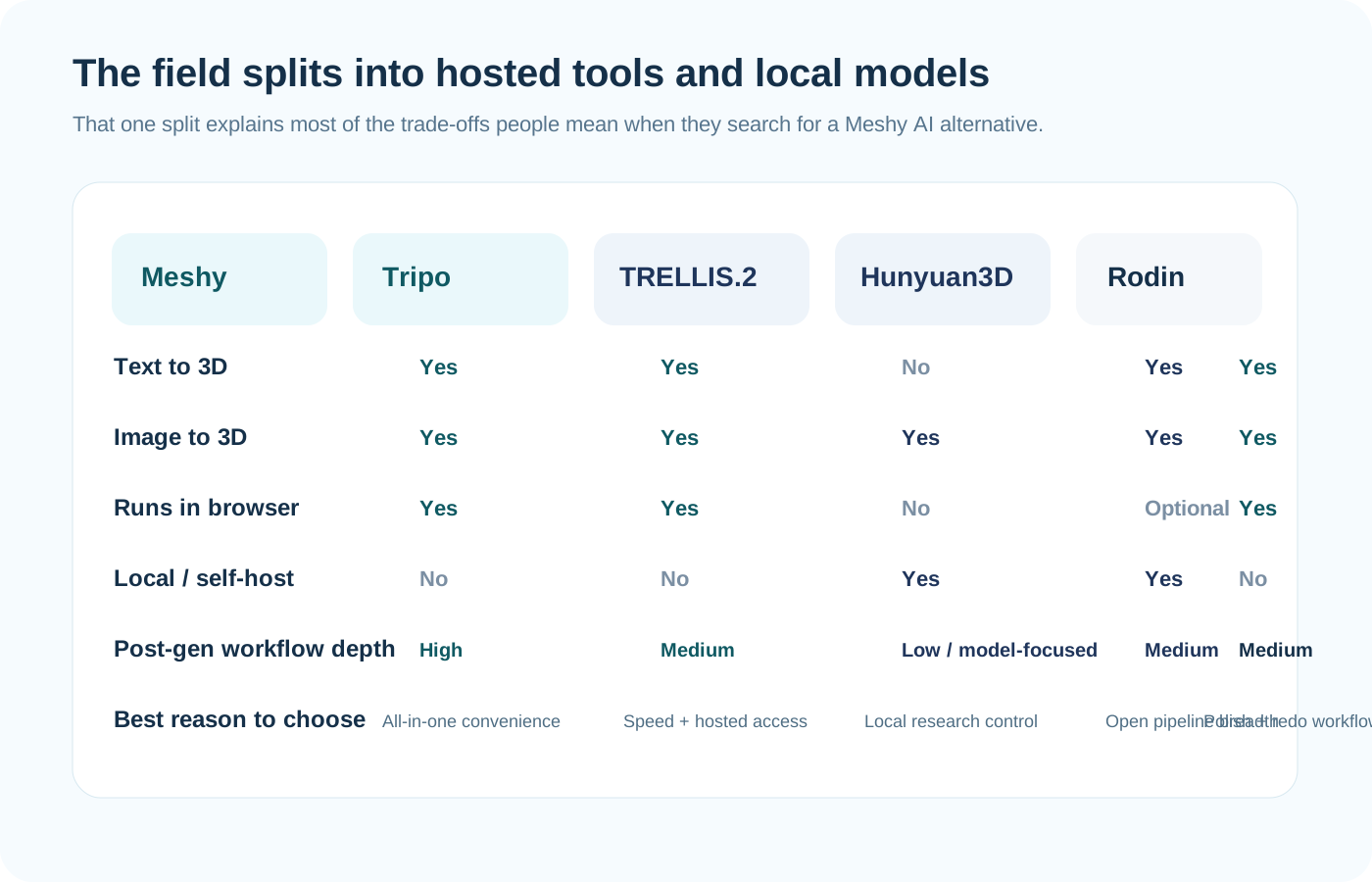
Meshy's official comparison hub is useful here because it admits the category split out loud. It frames Tripo as the speed-focused hosted rival, TRELLIS.2 as the open-source local rival, and Hunyuan3D as another open model path. That is the right first cut.
Hosted tools win on convenience. You do not manage CUDA, Conda, or VRAM budgets. Local tools win on control. You can own the environment, extend the stack, and avoid platform dependence if you have the hardware and patience. Neither side is morally better. They simply solve different headaches.
So if you want the best free alternative to Meshy AI in the abstract, the answer is not one product. It is one decision tree. Free hosted testing points you one way. Free self-hosted control points you another.
- Hosted path: Tripo and Rodin.
- Local path: TRELLIS.2 and Hunyuan3D.
- Meshy still wins if you want the broadest creator workflow in one place, but that is not what this article is about.
Tripo: the first hosted tool to look at
If your question is, "What is the closest hosted Meshy alternative?" the answer is Tripo. Meshy's own compare pages treat it as a serious head-to-head rival. Tripo's official platform docs and API pricing page also make clear that it is not a toy. It supports text-to-3D, image-to-3D, multiview generation, and paid API usage with published endpoint pricing. If you want the direct head-to-head read, open Meshy AI vs Tripo 3D in 2026.
Why does that matter? Because Tripo is the easiest answer for people who want a Meshy replacement without moving into a research stack. It is browser-first. It offers a real developer surface. It is good for quick concept generation, fast iteration, and teams that need something live today rather than a model repo tomorrow.
Its limits are the normal limits of this class. You still have to inspect topology. You still have to decide whether the result is good enough to keep. And if your end goal is a hero asset, you should expect cleanup. But as a practical hosted option, Tripo earns its place near the front of the line.
- Best for: hosted speed, low setup friction, and API-based experimentation.
- Why it beats some rivals: official API pricing is public and the entry path is simple.
- Why it may lose: less complete creator workflow depth than Meshy in some use cases.
TRELLIS.2: the real Meshy AI local alternative
If the search term is meshy ai local alternative, start with TRELLIS.2. This is the strongest clean answer because the official GitHub repo is explicit about what it is: a 4B-parameter image-to-3D model, tested on Linux, requiring an NVIDIA GPU with at least 24GB of memory, with GLB export and full PBR materials including base color, roughness, metallic, and opacity. If you want the tighter one-on-one comparison, read Meshy vs. Trellis 2 in 2026.
This is not casual software. It is research software with a serious release. That cuts both ways. On the good side, you get open code, open weights, and direct control over the environment. On the hard side, you need to own the environment. That means Linux, CUDA 12.4 for some packages, Conda-style dependency management, and enough hardware to make the whole thing real instead of theoretical.
So is TRELLIS.2 the best Meshy alternative? For ordinary creators, no. For technical artists, ML engineers, and researchers who value self-hosting more than convenience, absolutely maybe. It is the best local answer when control is the goal.
- Best for: local ownership, image-to-3D research, and open pipeline control.
- Bad fit for: people who want to click a button in a browser and move on.
- Hidden cost: hardware and setup can erase the apparent price advantage.
Hunyuan3D: the broader open-source answer
Hunyuan3D is often the more flexible public-model answer because the official Tencent-Hunyuan repos cover both text-to-3D and image-to-3D across multiple versions, including Hunyuan3D 2.1. The 2.1 repo describes a fully available framework with model weights, training code, and production-ready PBR material generation. That already makes it broader than TRELLIS.2 in one important way.
It also has a bigger ecosystem feel. The official repository history points to Blender add-ons, Windows-friendly wrappers, turbo variants, and a public studio. That does not make it frictionless, but it does mean you are not stepping into a dead lab release.
When people ask for meshy ai alternatives free or free alternative to meshy ai, Hunyuan3D is one of the best honest answers because it gives you a serious public model path without forcing you to settle for a tiny side project. The catch is the same as every local stack: read the license carefully, and remember that public code is not the same thing as zero-friction use.
- Best for: open-source users who want both text and image generation paths.
- Strength: public model family and more obvious ecosystem momentum.
- Trade-off: still a technical path, not a no-effort free lunch.
Rodin: the paid alternative if polish matters
Rodin sits in a different lane from the open models. Hyper3D's official pricing page frames it as a creator and business product, not a research repo. It offers image-to-3D and text-to-3D exploration, smart low-poly options, HD texture handling, baked normals, redo allowances, and higher-plan API access. That makes it a serious commercial alternative, not a hobby side road.
This matters if your frustration with Meshy is not cost or hosting. Maybe your frustration is consistency. Maybe you want more paid-plan control around retries, texture quality, and output handling. Rodin becomes interesting there.
The downside is obvious. It is not the cheapest path. But it can still be the better buy if it cuts enough cleanup or failed attempts. That is the whole rule for this category: judge cost against usable output, not against the monthly sticker alone.
What the Reddit thread gets right
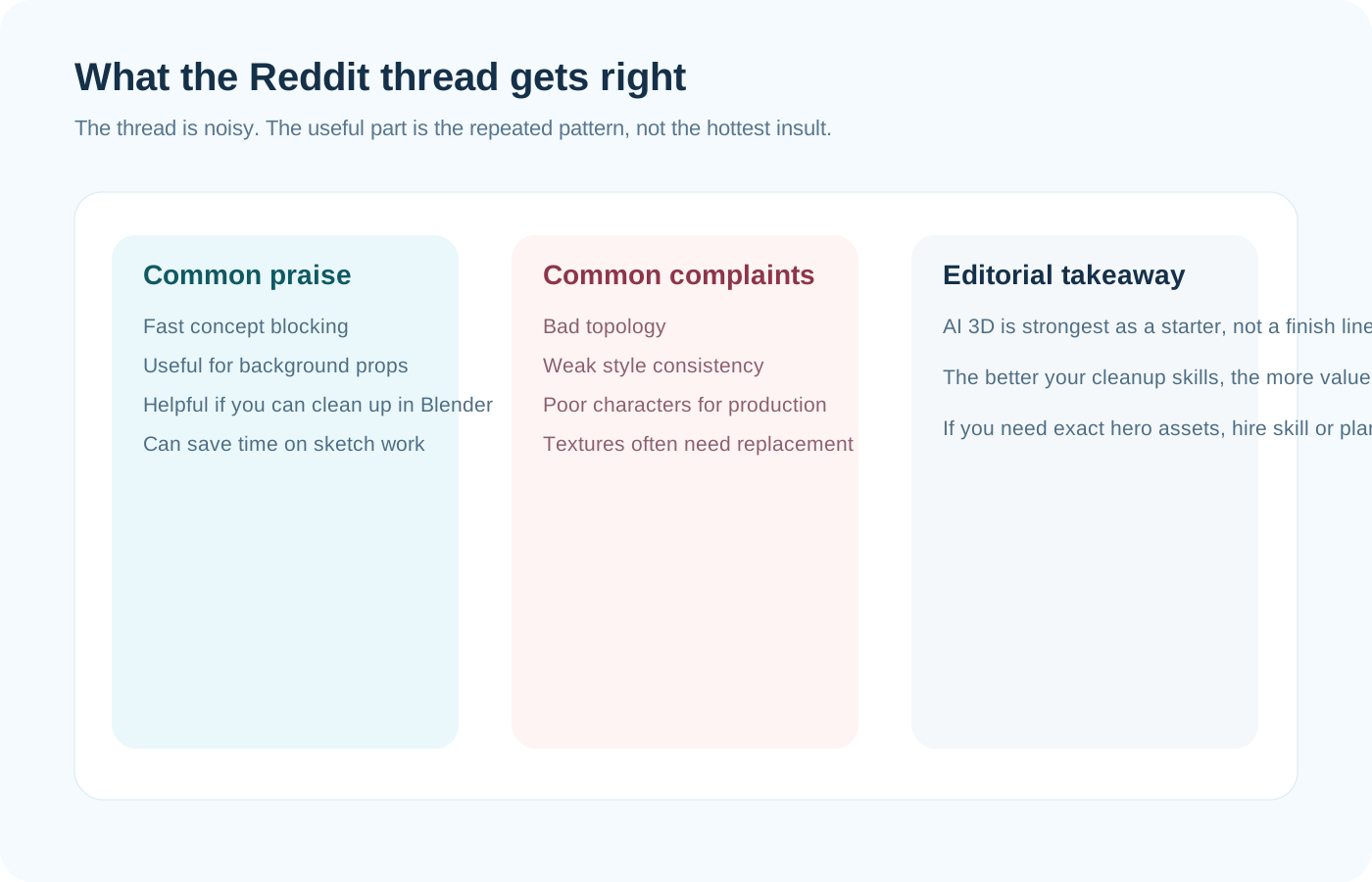
The Reddit thread you linked is noisy, emotional, and still worth reading. Not because every comment is smart, but because the repeated themes are useful. One cluster of users says these tools are great for blocking out ideas, background props, and getting a first pass into Blender. Another cluster says the topology is ugly, the textures are weak, the style is inconsistent, and characters still need too much repair.
Those are not contradictory views. They are describing different standards. If your bar is “good enough to help me think,” AI 3D can already be useful. If your bar is “drop into a production game as a hero asset,” the complaints get louder for a reason.
That Reddit pattern is the most honest way to read the market. The better your cleanup skills, the more value these tools have. The less tolerance you have for manual repair, the narrower the useful list becomes.
- Good for: blockouts, rough concepts, some background props, and idea speed.
- Weak for: exact hero assets, strong style consistency, and zero-cleanup expectations.
- Editorial conclusion: AI 3D is strongest as a starter, not as a finish line.
Which alternative is best for each search intent
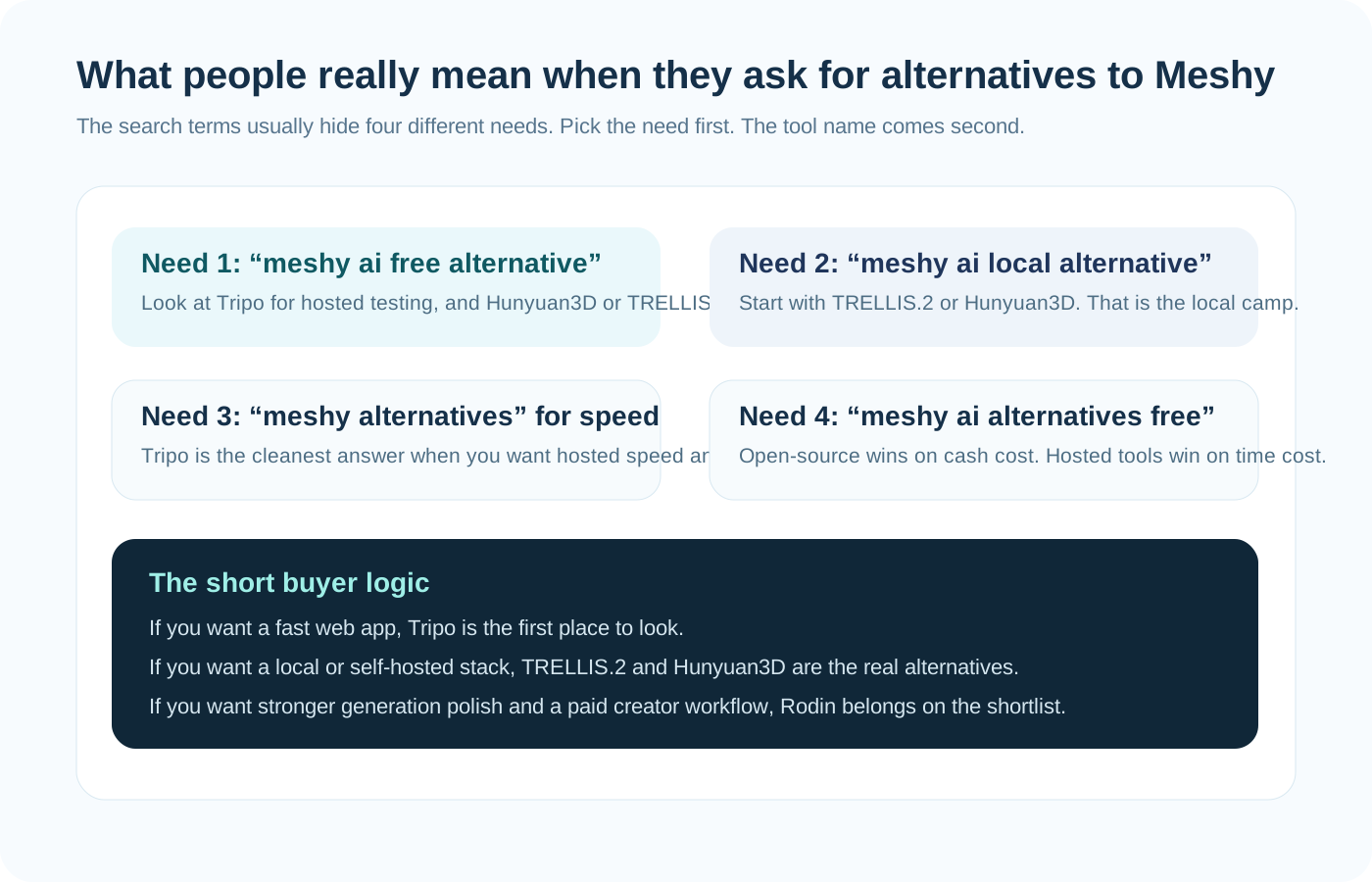
If you search meshy ai free alternative, the honest answer is Hunyuan3D or TRELLIS.2 if you already own the hardware, and Tripo if you want hosted testing without building a local lab. If you search meshy ai local alternative, skip the hosted tools and go straight to TRELLIS.2 or Hunyuan3D.
If you search meshy alternatives because you want another browser-first option, Tripo should be your first stop and Rodin your second. If you search meshy ai alternative free because you want zero subscription pain, remember that local models are only free if your time and GPU cost nothing, which they do not.
This is why broad articles on meshy ai alternatives often waste time. They pretend all replacement goals are the same. They are not. The right replacement depends on what you are replacing.
My conclusion after looking at the official sources
If you want the best hosted alternative to Meshy, pick Tripo first and evaluate Rodin second if you need a more premium workflow. If you want the best open or local alternative, start with TRELLIS.2 when image-to-3D research control is the point, and Hunyuan3D when you want a broader open model family that also covers text-to-3D.
If you want one sentence: Tripo is the best meshy ai alternative for people who want another hosted app. TRELLIS.2 is the best meshy ai local alternative for people who want control. Hunyuan3D is the best broad open-source answer. Rodin is the best paid polish-first alternative when you are willing to spend for better workflow structure.
And if you are still hoping for a truly magical meshy ai free alternative reddit answer with no bill, no GPU, no cleanup, and no skill requirement, that answer still does not exist.
Once you pick a stack, the next practical question is export hygiene. For that, continue with How to Export Meshy AI Without Losing Color.
Frequently Asked Questions
Is AI making us over-reliant and devaluing human expression?▾
That risk is real if a team treats AI as a replacement for taste, judgment, and craft. In the healthier version of the workflow, AI shortens the dead time around first drafts, while humans still decide style, story, cleanup, and what deserves to exist. If that human layer disappears, the work gets thinner fast.
I simply cannot lose an entire weekend creating 3D monsters. I have a family. Which tool is best?▾
That is exactly when hosted tools earn their keep. If your goal is fast ideation and you need a result today, Tripo is the fastest alternative to try. If you already know you will clean in Blender, Meshy, Tripo, or Rodin can all save time. Local stacks like TRELLIS.2 and Hunyuan3D make less sense if your first problem is time, not control.
Why does AI keep turning houses into monsters?▾
Because these models are still probabilistic generators, not true semantic reasoners with production-grade precision. When prompts are vague, references are weak, or the model has a fuzzy internal prior for the category, it can drift into the wrong shape family. Architecture and vehicles are still less forgiving than simple props or stylized creatures.
What is the best Meshy AI free alternative right now?▾
If you mean open-source and self-hosted, Hunyuan3D and TRELLIS.2 are the strongest answers from official sources. If you mean a hosted tool you can test quickly, Tripo is the cleanest practical answer.
What is the best alternative to Meshy for local use?▾
TRELLIS.2 is the clearest local-first answer if you want image-to-3D research control and you have Linux plus a 24GB NVIDIA GPU. Hunyuan3D is the broader local alternative if you also want a public text-to-3D path and a more expanded open ecosystem.