
#1
Pacdora
- Our Score
- 10/10
- Best For
- Packaging & dielines
- Primary Use
- Packaging mockups
- 3D Mockups
- Yes
- Dielines
- Yes
- Free Plan
- Limited
- Starting Price
- From ~$199/yr
- Notable Feature
- Dieline Template Maker
We compared tools built for packaging mockups and Mockup Generator workflows, plus heavier 3D Modeling Software and Dieline Template Maker jobs, the way creators actually use them: export quality, dieline accuracy, 3D preview speed, and whether you need a paid plan. Rankings reflect features, pricing, and workflow fit as of July 2026. If you came here after a Pacdora Review, this ranking helps place it against simpler mockup tools and heavier packaging workflows.
Overwhelmed by options? We lined up the key differences for packaging, mockups, logos, and print workflows. Use this table to spot which tools fit your job, then read the full reviews below.


| Spec | | | | | | | | | | |
|---|---|---|---|---|---|---|---|---|---|---|
| Our Score | 10/10 | 9.8/10 | 9.6/10 | 9.5/10 | 9.3/10 | 9.1/10 | 9.0/10 | 8.9/10 | 8.8/10 | 8.6/10 |
| Best For | Packaging & dielines | Marketing mockups | Free mockups | Everyday graphics | POD merch | Browser mockups | Motion 3D | Quick Adobe work | Video + logo kit | Budget 3D spins |
| Primary Use | Packaging mockups | Mockup + logo maker | Mockup Generator | Poster / card / logo | Tshirt design + print | Product scenes | 3D Modeling Software | Logo + short video | Logo maker + video | 3d model preview |
| 3D Mockups | Yes | Yes | Yes | Basic | Apparel | Yes | Advanced | Limited | Template | Yes |
| Dielines | Yes | No | No | No | No | No | No | No | No | No |
| Free Plan | Limited | No | Yes | Yes | Yes | Limited | Limited | Yes | Limited | Yes (ads) |
| Starting Price | From ~$199/yr | ~$14.95/mo | Free / from $7 | Free / Pro | Free to start | ~$19/mo | ~$15/mo | Free / Premium | ~$9.99/mo | Free / ~$4.99 |
| Notable Feature | Dieline Template Maker | Huge template library | AI background remover | Business card maker | Fulfillment network | Real-time editor | Animated product films | Video to gif friendly | All-in-one dashboard | MP4 3D exports |
The rankings above are a scorecard. Below we dig into the three tools we would actually put on a brand launch: how they handle packaging mockups, whether a Dieline Template Maker survives Illustrator, and when you still need separate 3D Modeling Software or a dedicated Mockup Generator.
Each write-up follows the same structure: what we like, what we do not, then a deeper look at mockups, exports, pricing, and who should buy it.
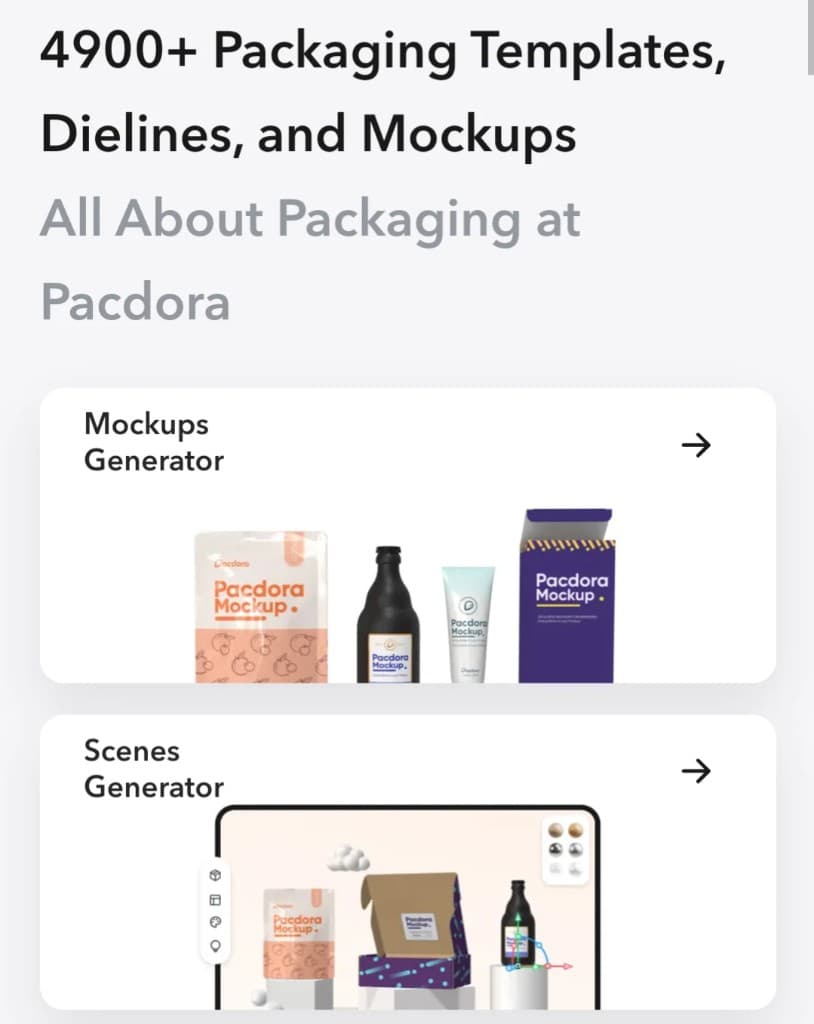
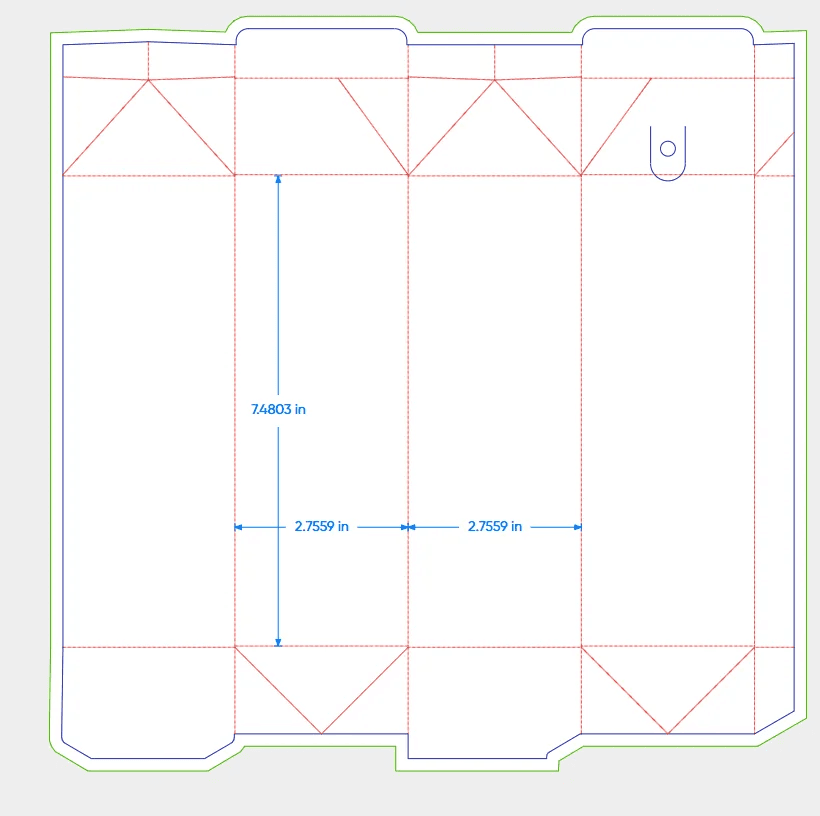
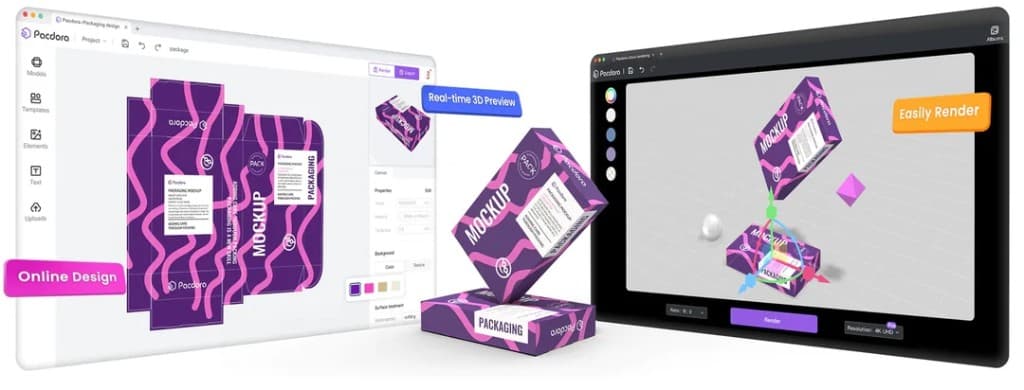
Pacdora sits at #1 because it is the rare tool that treats packaging as manufacturing, not just a pretty render. You get packaging mockups from a built-in Mockup Generator, a Dieline Template Maker for cut and crease paths, and light AI packaging design in one browser flow. That is why we call it the best packaging design software pick for 2026 founders, freelancers, and small CPG teams.
If you need to learn how to design product packaging that a printer can cut, fold, and fill (mailer boxes, cartons, pouches, even a labubu blind box-style toy carton). Pacdora is the shortlist winner. Pair it with a trusted barcode generator or upc generator for retail codes; Pacdora owns structure and packaging mockups, not GS1 compliance.
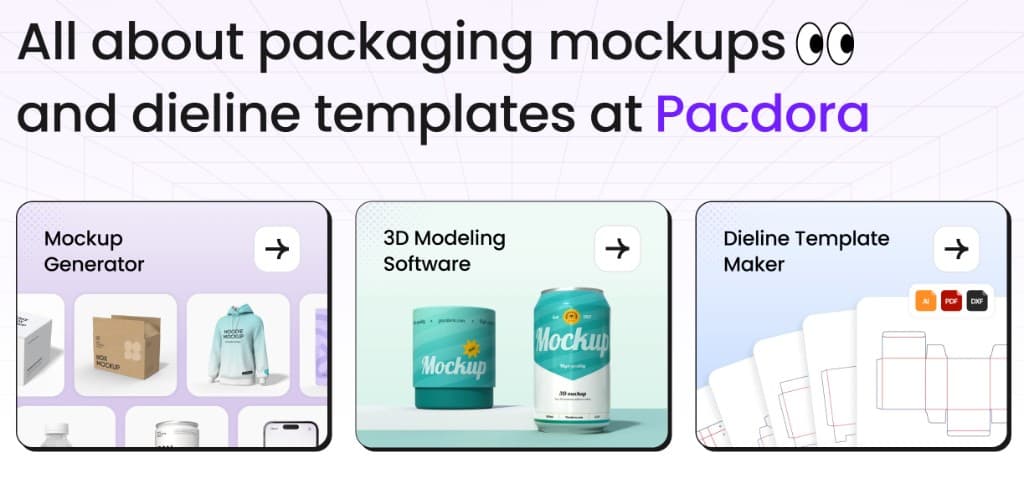
A lifestyle Mockup Generator alone will not save a bad structure. Pacdora's edge is a Dieline Template Maker tied to the same sizing you preview in packaging mockups. Hide die lines when you export a clean client preview; keep them on for print files. That single habit prevents the classic beginner mistake of treating cut paths as decoration.
For retail packs you still place barcodes and QR codes from a free barcode generator source or a paid upc generator after the structure is locked. Pacdora helps the carton look right; your code library still owns scan quality.
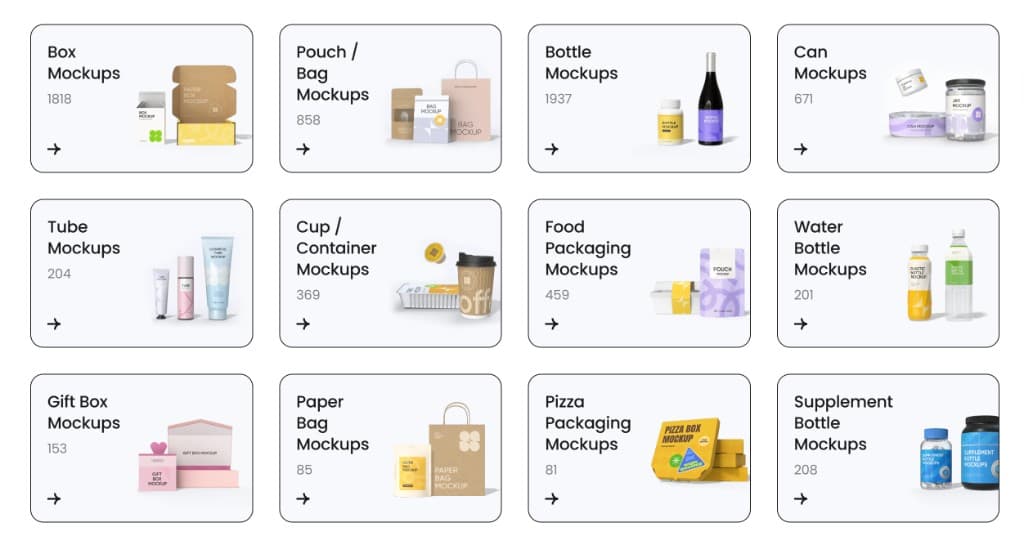
Why Pacdora? Because the expensive mistake in packaging is not a wrong font—it is approving a look that cannot survive a die cutter. You have felt that gap: a client loves the mockup, the sample arrives, flaps fight each other, the logo straddles a crease, and you eat the reprint. Lifestyle Mockup Generators sell the fantasy. Pacdora sells the structure underneath it—a Dieline Template Maker locked to the same size you preview in packaging mockups—so what you show is what the board can actually become.
That is the reason freelancers who ship physical products end up on Pro yearly: not because the logo looks nicer in a browser, but because one wrong fold costs more than a year of the tool. Buy Business only when commercial or reseller rights are part of how you invoice. If your week is mostly social apparel scenes with no cut path, Placeit or Mockey will feel faster and cheaper. The moment the brief is a real carton, mailer, pouch, or collectible pack that has to leave a factory, start here.
Pacdora is for you if you sell physical goods and need a printable dieline workflow; if you want packaging mockups before you burn money on samples; if you live in Illustrator and need cut/fold layers you can lock instead of redraw; if you are building specialty structures—including collectible or Labubu-style blind box cartons—where guesswork is not a brand strategy. When you are ready to subscribe, Pro yearly is the usual landing spot; code DGET takes an extra 20% off at checkout.
Pacdora earns Best Overall because it stacks the hard parts of packaging: structure, a Dieline Template Maker, and credible packaging mockups from one Mockup Generator. Lifestyle tools win Instagram; Pacdora wins the carton that has to survive a die cutter.
Placeit is our #2 because marketing teams live in mockups. Apparel, devices, billboards, and logo reveal videos ship faster here than in a full packaging stack. Treat it as a campaign Mockup Generator, not a factory tool. If Pacdora is where packaging mockups meet dielines, Placeit is the storefront window.
It also doubles as a practical logo maker for early brand kits when you are not ready for a custom identity project.
Use Placeit after structure is locked in Pacdora, or when the product is digital/apparel-first. Pair logo exports with Canva for a business card maker pass, or send art to Printify when tshirt design needs fulfillment.
Placeit is the Best Marketing Mockups pick: fast, broad, and campaign-ready. Keep Pacdora for packaging mockups and dielines; keep Placeit as your ad-side Mockup Generator.
Mockey earns Best Free Mockups by making high-volume template work affordable. The AI background remover is the sleeper feature: clean a product photo, then drop it into a mockup without opening Photoshop.
It will not replace Pacdora as a Dieline Template Maker, but it is an excellent free-friendly Mockup Generator for apparel and lifestyle shots.
Start on Mockey when budget is tight and you need a mockup today. Graduate structure work to Pacdora the moment you are ordering real packaging.
Most buying regret comes from answering the wrong question. Reddit threads keep circling the same doubts: Which tools make beautiful mockups without Photoshop? Why do Printify, Mockit, and every POD generator look identical? Is a free auto-generator good enough, or should I build client-specific blanks with AI and finish in Illustrator, Photoshop, or After Effects? Do I need a fast device Mockup Generator, a packaging stack, or just a free PSD library like Rawpixel?
An objective buying guide starts with the deliverable leaving your desk—not the brand logo on the pricing page. Packaging cartons, apparel listings, phone/laptop ads, portfolio case studies, and motion product films are five different jobs. One subscription rarely covers all five well.
Physical packaging that a printer must cut and crease needs structure, not just a pretty render. Pacdora wins when you need packaging mockups plus a real Dieline Template Maker—size the box, preview in 3D, export print-ready paths. Marketing and lifestyle scenes (apparel hung in a room, logo on a billboard, device in a hand) are Placeit or Mockey territory. Everyday brand graphics—posters, business cards, campaign layouts—fit Canva or Adobe Express. Motion, spins, and cinematic product films belong in Artboard Studio or 3dmockup.co once a static Mockup Generator export is not enough.
If your only need is a free downloadable PSD or scene to drop art into, a curated free library can beat a paid generator for one-off work. Paid generators pay for speed, volume, commercial clarity, and not opening Photoshop for every request.
Creators repeatedly complain that Printify's built-in tool, Mockit, and similar POD generators all feel generic. That is not a branding failure—it is how fixed libraries work. The same shirt folds, same lighting, same model poses get reused across thousands of stores. Buyers notice. If your storefront looks like every other merch shop, the problem is usually the library, not your design.
Printify is still the right fulfillment layer once art is ready; it is not the best place to hunt for distinctive photography. For more realistic apparel shots, look for generators with deeper lifestyle scenes, lighting control, or custom angles (Placeit, Mockey, or a 3D scene tool). For a truly unique look, many freelancers generate a blank, client-specific mockup with AI, then composite the print in Illustrator or Photoshop. That hybrid workflow is slower than a one-click POD preview—and it is why some portfolios stop looking like everyone else's.
A large share of Reddit posts ask for the world's fastest device Mockup Generator, or a free tool that auto-builds mockups because Photoshop feels too heavy and stock scenes feel dull. Free-friendly options on this list (Mockey, 3dmockup.co, Canva's free tier) are the right first test: upload art, pick a scene, export without fighting layers. Use them when speed and volume matter more than uniqueness.
When the brief is "super specific to this client," fixed libraries run out of runway. The hybrid path—AI for a custom blank, then Illustrator / Photoshop / After Effects for the final composite—gives control that no template catalog can match. Subscribe to a generator when you ship many similar assets weekly. Stay hybrid (or use free PSDs) when each project needs a one-of-a-kind environment, custom animation, or portfolio-level craft.
A Mockup Generator that also acts as a Dieline Template Maker is a different product from a PSD-style lifestyle scene. Packaging mockups tied to real board size help printers cut correctly; marketing mockups only need the client to like the look. Mixing those jobs is a classic reprint: a Placeit carton that looks great on Instagram still cannot travel to a die cutter as a manufacturing file.
Keep barcodes and QR codes out of the generator's "nice to have" features. Generate retail codes from a dedicated UPC / barcode source, then place them in the quiet zone on your art. Mockey can handle cutouts with an AI background remover; Pacdora handles structure; neither replaces a compliant code library.
Before you subscribe, check five things that decide whether the plan is worth it: (1) commercial / client / reseller license language, (2) export resolution and formats (still vs MP4 / GIF), (3) watermark and monthly download or credit caps, (4) whether the library covers your SKUs—devices, apparel, packaging, or only posters—and (5) seat count if a team shares the account. Yearly billing is usually cheaper if you already know the tool fits; monthly is safer while you A/B a free tier against one paid month.
Skip the upsell if your bottleneck is uniqueness, not speed: a paid unlimited template plan will not fix a store that already looks like every other POD shop. Buy speed and license clarity when the library already matches your niche. Buy Pacdora when structure and dielines are the risk. Buy Placeit or Mockey when marketing volume is the risk. Buy Artboard Studio or 3dmockup.co when static frames are no longer enough.
It depends on uniqueness vs speed. For high volume and fast turnaround, use a Mockup Generator (Placeit, Mockey, Pacdora for packaging). For client-specific or portfolio work that must not look like a stock library, many creators generate a custom blank with AI and composite in Illustrator, Photoshop, or After Effects. Free PSD libraries still work for one-off downloads.
Most POD tools (including Printify's built-in previews) rely on fixed template libraries—same folds, lighting, and poses. They are fine for fulfillment checks, weak for distinctive storefront photography. Use a deeper lifestyle Mockup Generator or a custom AI + Photoshop composite when realism and differentiation matter.
Yes. Browser tools like Mockey, Placeit, Canva, Pacdora, and 3dmockup.co auto-generate scenes without opening Photoshop. That is the whole point of a modern Mockup Generator. Reach for Photoshop or Illustrator when you need pixel-level control, custom composites, or print production layers.
Pacdora ranks #1 for physical packaging: packaging mockups, a Mockup Generator preview, and a Dieline Template Maker in one workflow. Use Placeit or Mockey for lifestyle marketing scenes, and Artboard Studio when you need heavier 3D Modeling Software or motion.
Buy Pacdora first if you are shipping cartons or learning how to design product packaging with real dielines. Buy Placeit first if your bottleneck is lifestyle mockups, logo exports, and ad creative.
Printify is strong as a fulfillment layer after tshirt design is done. Its built-in mockups are convenient but often look generic next to dedicated generators. Many sellers design art elsewhere, preview on Placeit or Mockey for marketing shots, then send files to Printify to print and ship.
Yes. Pacdora handles structure and packaging mockups. Retail packs still need a separate UPC or barcode source so codes meet quiet-zone and scan rules.
When a static Mockup Generator export is not enough—product spins, short films, cinematic lighting, or deeper 3d model control. Artboard Studio and 3dmockup.co cover that layer. Most packaging and social stills do not need it on day one.
Yes. Mockey and 3dmockup.co offer free-friendly starts; Canva's free tier covers simple layouts. Run one real project on free exports, confirm commercial terms and resolution, then move to yearly only if the library and license fit. Free PSD resources remain useful for occasional one-off downloads.
AI Tools
Best AI 3D Model Generators 2026
AI Tools
How to Use PopAi: Beginner's Guide
AI Tools
PopAi AI PowerPoint Review: Stop Fighting Blank Slides
AI Tools
Meshy AI vs TRELLIS.2 vs Tripo3D: Which AI 3D Tool Is Best in 2026?
AI Tools
Meshy AI vs Tripo 3D in 2026: Which AI 3D Model Generator Is Better?
AI Tools
Best Free Meshy AI Alternative in 2026
AI Tools
Meshy Alternatives: Tripo, Trellis 2, or Any Other?
AI Tools
How to Export Meshy AI Without Losing Color
Editorial Methodology
Last reviewed: 2026-07-24
We scored each tool the way creators actually decide: deliverable fit (packaging vs lifestyle vs POD vs motion), whether the library looks generic, export and license clarity, and whether a free or hybrid Photoshop workflow already solves the job.
We compare published product details, real buying tradeoffs, warranty or support signals, and long-term ownership friction — not marketing claims in isolation. Prices and availability can change, so verify the final details with the retailer before purchasing.